Last updated November 21, 2026
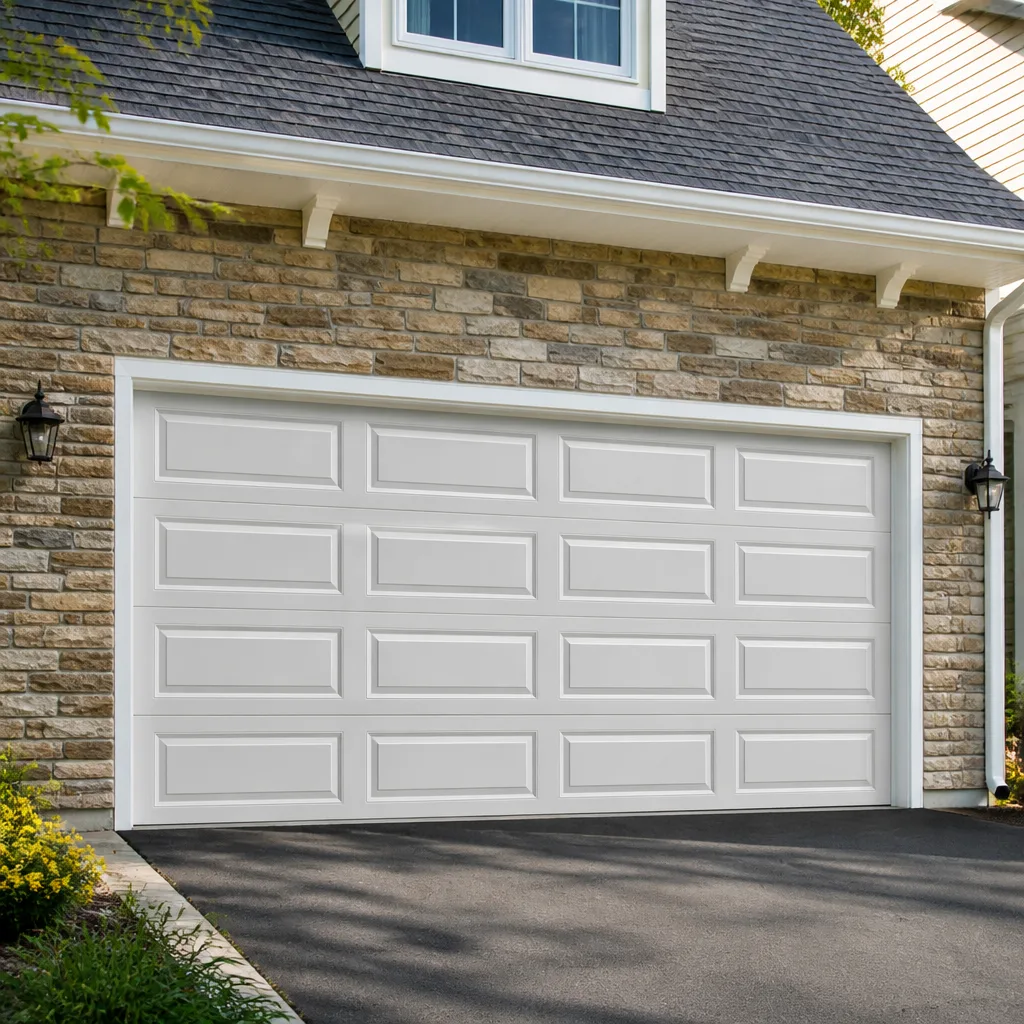 Raised-panel steel
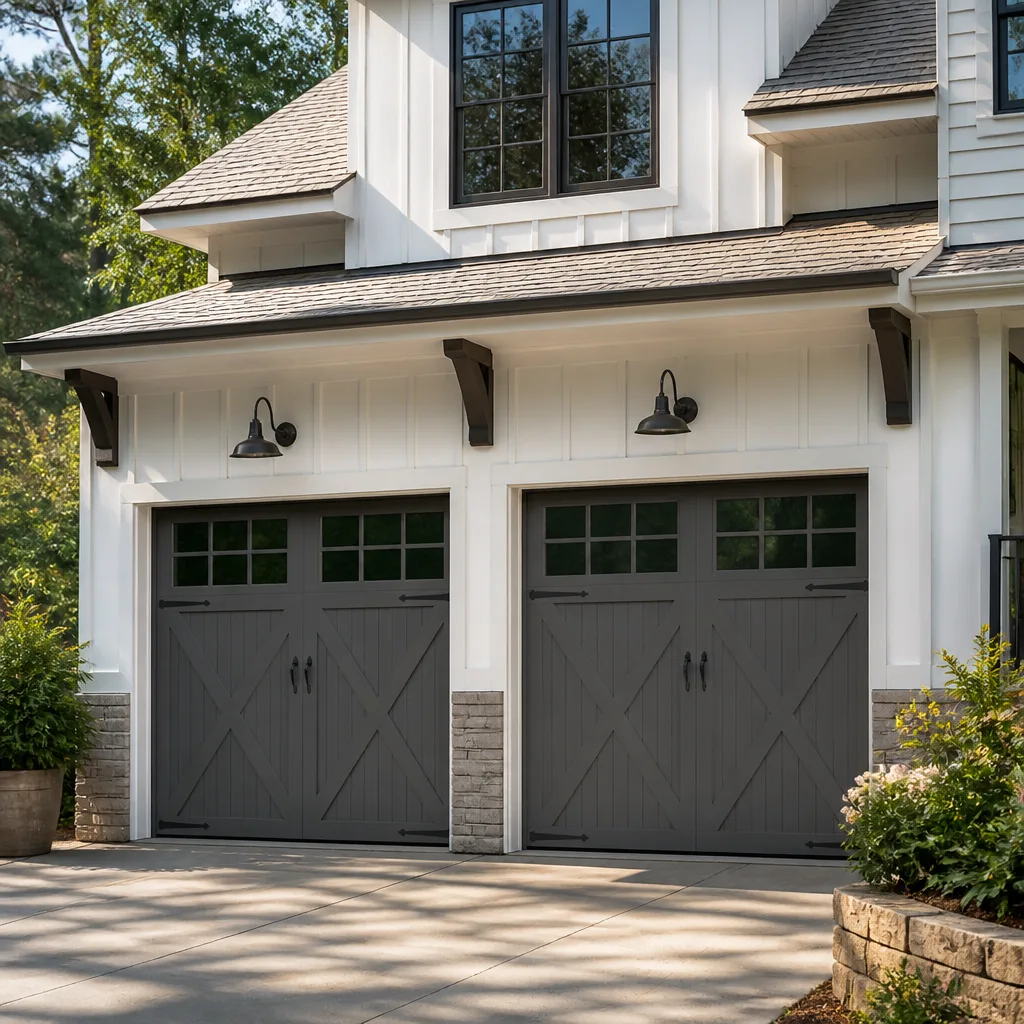 Carriage house
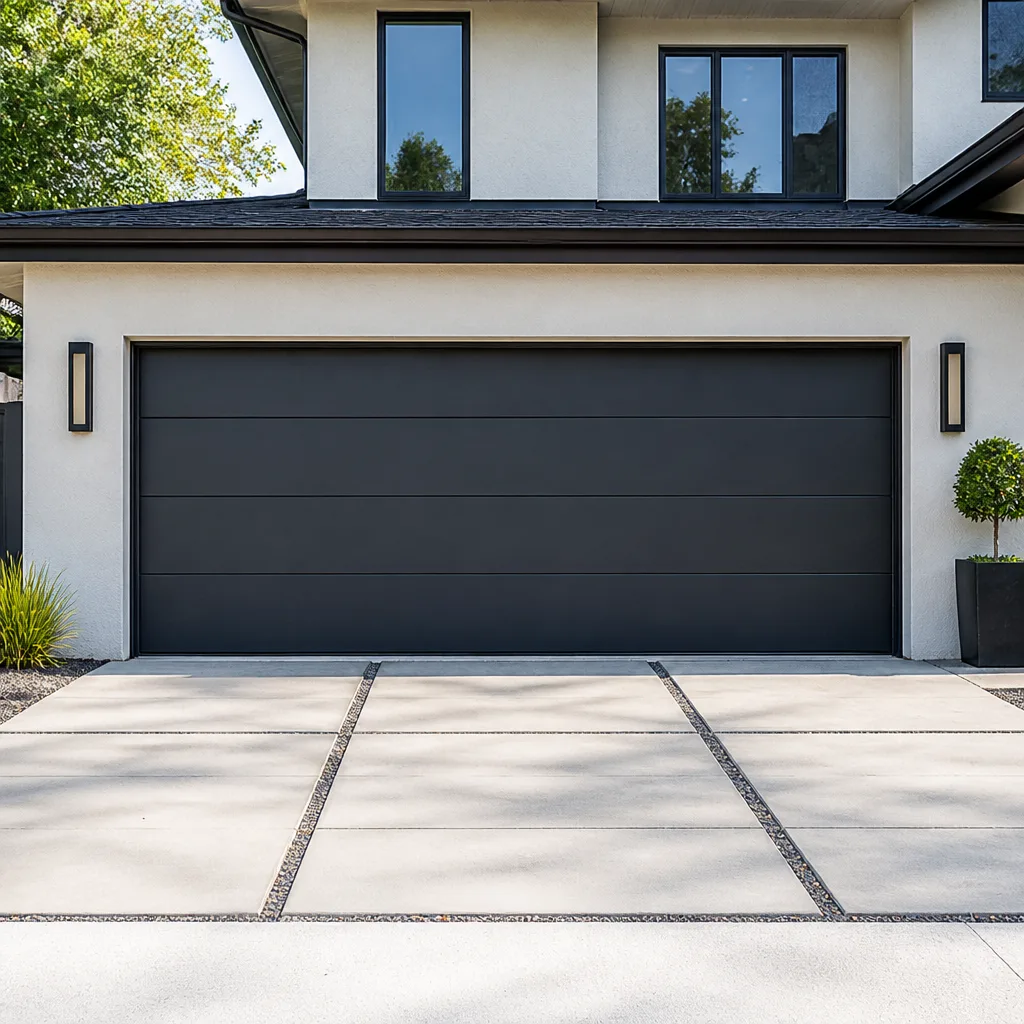 Modern flush
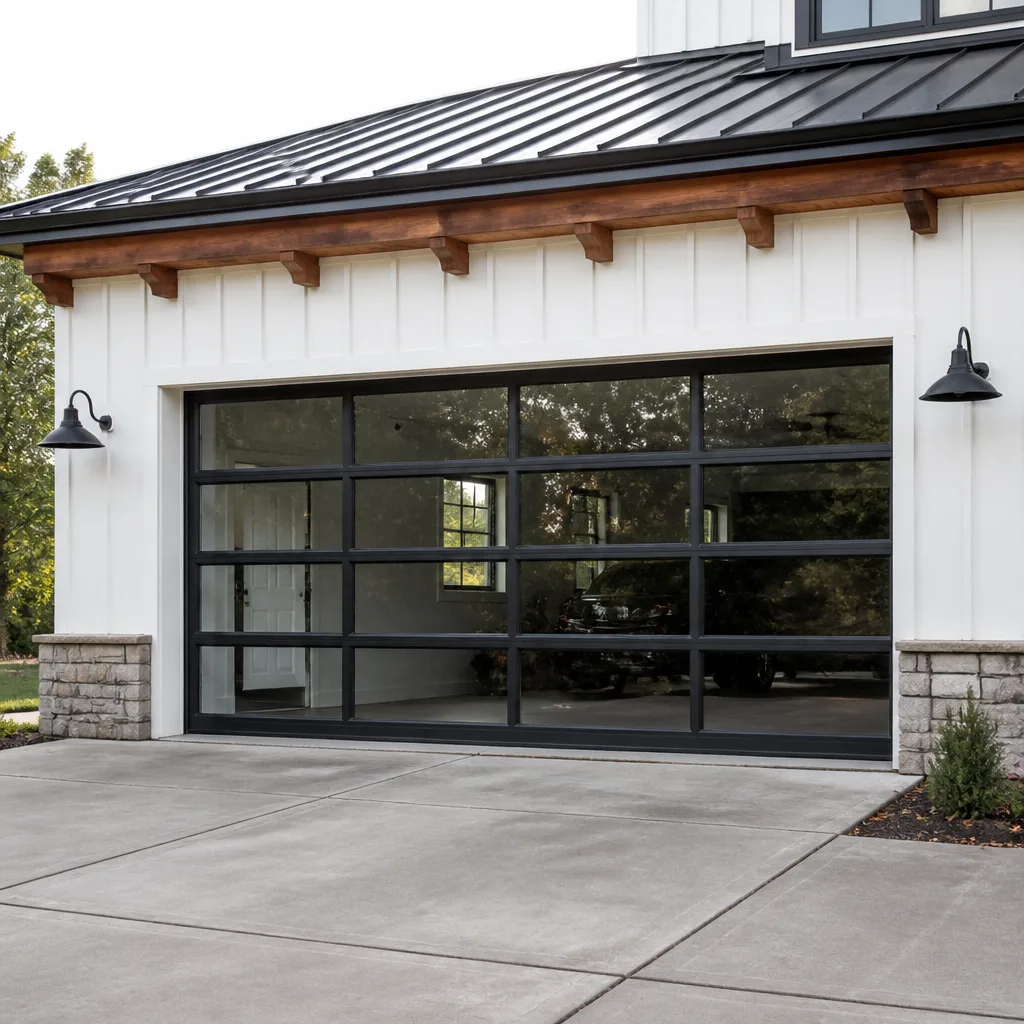 Full-view glass
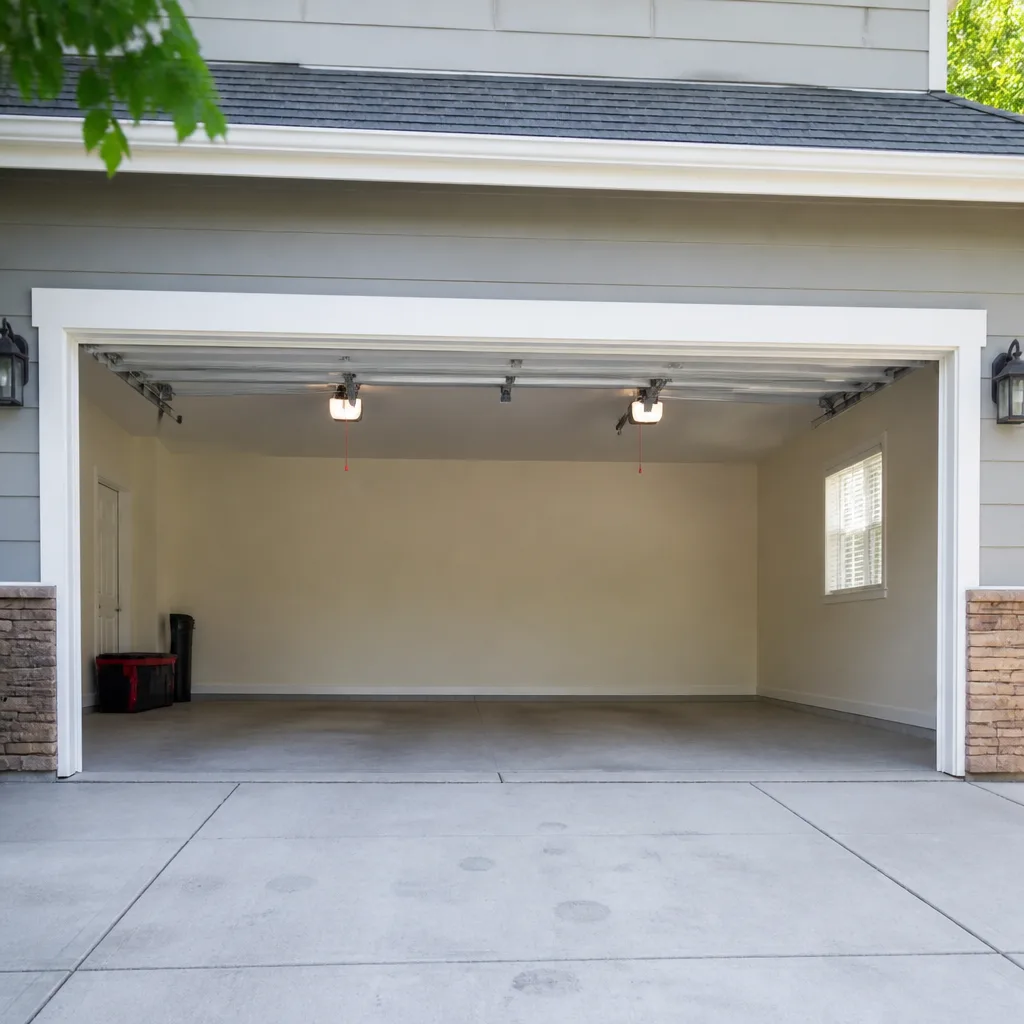 LiftMaster openers
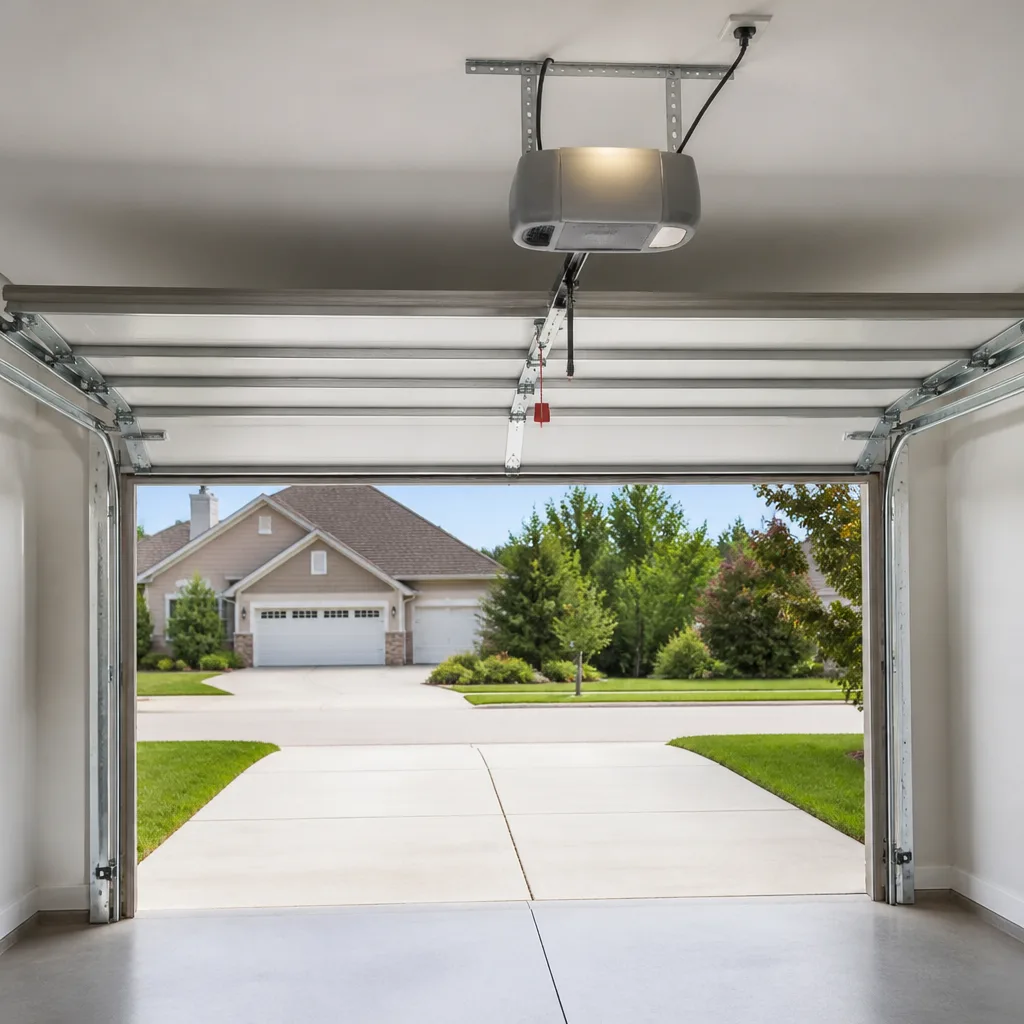 Chamberlain openers
Full 25-point door and opener safety check with every visit - springs, cables, rollers, tracks, and your LiftMaster or Chamberlain opener included
You get a price before we start. It does not change when the pro arrives.
Get your free estimateDIY vs Professional Garage Door: The Atascocita Homeowner’s Decision Guide
Most homeowners assume the DIY-or-pro question comes down to skill. It doesn’t. It comes down to stored energy and liability. A torsion spring on a standard residential door holds roughly 100 foot-pounds of torque under tension – energy that can release in a fraction of a second if a winding bar slips, and has sent plenty of homeowners to the ER with fractures and worse. That’s not a scare tactic. It’s the reason this guide exists: to draw a hard, honest line between the tasks you can and should handle yourself, and the ones where the physics simply doesn’t care how handy you are. We’ll cover what’s safe, what isn’t, and how to spot an upsell disguised as safety advice. This guide is written from Atascocita, for Atascocita homeowners.
Quick Answer
Some garage door tasks are genuinely safe for homeowners – lubrication, weatherstrip replacement, remote reprogramming, and using the manual release. But torsion spring replacement, cable replacement on a live spring system, and any work on a door that’s off its tracks should go to a trained technician. The line isn’t about confidence or how many YouTube videos you’ve watched; it’s about stored mechanical energy that can injure you in under a second, and the real risk that a half-correct repair wrecks the opener or track and costs more than the original job would have.
Styles & brands we work with
- Raised-panel steel
- Carriage house
- Modern flush
- Full-view glass
- LiftMaster openers
- Chamberlain openers
Table of Contents
- Where DIY Ends and Professional Repair Begins
- Tasks That Are Genuinely Safe for Homeowners
- Why Torsion Spring Replacement Is Categorically Not DIY
- Cable Replacement on a Live Spring System
- The Real Cost Comparison: DIY Parts vs Professional Repair
- How to Tell an Upsell From a Genuine Safety Warning
- Atascocita Climate and Your Garage Door System
- When to Call a Professional
Where DIY Ends and Professional Repair Begins
Here’s the counterintuitive part: “DIY vs professional” is not a single decision. It’s a whole category of decisions, each one with a different risk profile. A homeowner who can confidently lubricate a torsion bar, replace a bottom weatherstrip, and reprogram a LiftMaster remote is being sensible. That same homeowner attempting to wind a torsion spring with two screwdrivers and a ladder is taking a serious physical risk, even if the task looks mechanically similar to something they’ve done before.
The dividing line has three tests, and any single “yes” pushes the job into professional territory:
- Does the task require you to release or hold stored energy? Springs, cables, and anything tensioned on the counterbalance system qualify. This is the big one.
- Does a mistake create a hazard that outlives the repair? A door that’s misaligned after a bad panel swap, or an opener whose force limits were set wrong, can fail weeks later – usually when someone is standing underneath.
- Does the component weigh enough to injure you if it moves unexpectedly? A sectional door panel can weigh 30 to 50 pounds. A torsion spring under load, when it lets go, moves faster than you can react.
Compare that to the safe list: lubrication, weatherstripping, remote pairing, manual release. None of those involve stored energy, none of them can create a delayed failure, and none of them will drop 40 pounds on you. That’s not a coincidence. That’s why the line falls where it does.
Atascocita homeowners ask us this question constantly, and the honest answer is that most of the routine maintenance your door needs is homeowner-appropriate. Most of the garage door repair work, however, is not. The rest of this guide explains exactly where you sit on that spectrum depending on what’s wrong.
Tasks That Are Genuinely Safe for Homeowners
We’re not going to pretend every homeowner call is necessary. Several routine tasks are safe, useful, and worth doing yourself – and doing them well genuinely extends the life of your door.
- Lubrication. A garage door has more moving parts than most homeowners realize: rollers, hinges, torsion bar bearings, and the track itself. A light application of garage-door-specific lubricant (not WD-40, which attracts dust) once or twice a year quiets the door and reduces wear. Every roller and hinge pivot is fair game. Stay off the springs themselves.
- Weatherstrip replacement. The bottom seal wears out in Atascocita’s heat and humidity faster than in most of the country. Replacing a bottom weatherstrip is a straightforward homeowner task – measure, cut, slide out the old one, slide in the new. No tension involved.
- Remote reprogramming. Whether you’ve swapped a battery, bought a replacement remote, or need to add a second vehicle, pairing a remote to a modern opener (LiftMaster and Chamberlain in particular make this simple) takes a few minutes and a step ladder. The manual will list the button sequence.
- Manual release operation. Every door has a red pull cord that disengages the opener from the door during a power outage. Knowing how to use it safely is basic household literacy – pull it only when the door is fully closed, and re-engage once power returns.
- Visual inspection. A monthly glance at the springs, cables, rollers, and hinges catches a lot. If you see a gap in a torsion spring, a frayed cable, or a roller out of its track, stop using the door and call someone.
That list is short but it’s real. If your opener is dead, your spring is broken, or your door is off the track, skipping the DIY attempt and calling for garage door opener repair is the right move.
Why Torsion Spring Replacement Is Categorically Not DIY
Let’s talk about the physics for a moment, because this is where honesty matters more than anything else in the guide.
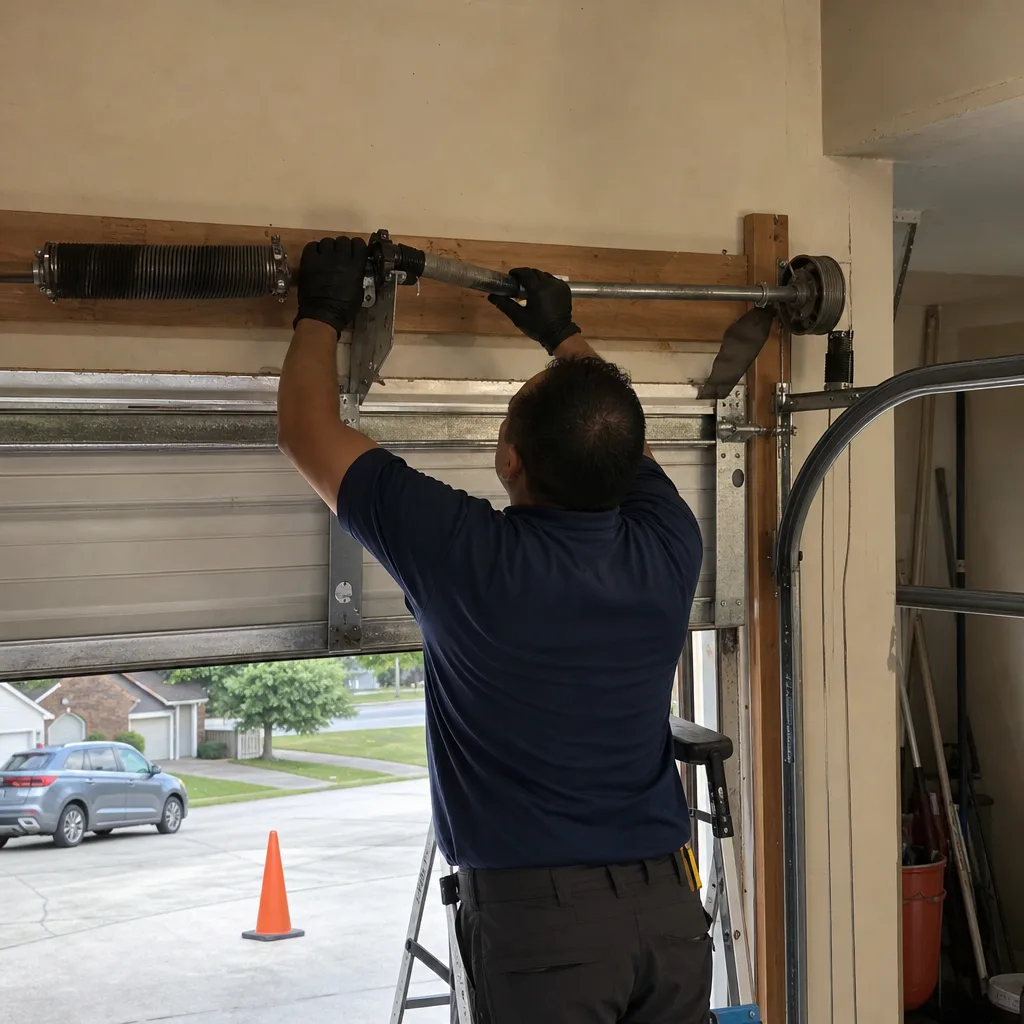
A torsion spring works by storing rotational energy. When the door is closed, the spring is wound tight – holding roughly 100 foot-pounds of torque on a typical residential door. That energy is what makes a 150-pound door easy to lift with one hand. When you replace a spring, you have to wind it to roughly that same tension before the door works. Winding a spring means controlling that stored energy with a pair of steel rods inserted into the winding cone while standing on a ladder.
When a winding bar slips, or the spring breaks mid-wind (which used to be its failure mode in the first place), the release is violent. The spring whips, the door drops if the other spring is compromised, and the homeowner is standing directly in the path. Fractures, deep lacerations, and worse are documented outcomes, not hypothetical ones. This is why professional spring replacement exists as a discipline – because the garage door spring repair task is a controlled release of stored energy done by someone who has practiced it hundreds of times.
Two more reasons the professional route wins here:
- Spring matching. Springs are rated by wire gauge, inside diameter, and length – and the replacement must match the original weight of the door or the opener works harder than it should. A mismatched spring shortens opener life.
- Safety hazard buffers. Most modern torsion systems use containment cables inside the spring so a break doesn’t send pieces flying. Reinstalling a broken spring without re-running that safety cable is a common DIY miss.
Springs store enormous tension – this is not a DIY repair. That’s the whole story.
Cable Replacement on a Live Spring System
Cables are the second component worth a hard line, and this is where a lot of mechanically confident homeowners get in trouble. The cables on a garage door don’t exist in isolation. They’re part of the counterbalance system: they wrap around the drums at each end of the torsion bar and hold the door in alignment as it rises and falls. When a cable snaps, the door often drops on one side. When a homeowner tries to replace a cable without first releasing the spring tension, the spring has no reason to stay put.
Every cable replacement on a live spring system requires you to first unwind the spring tension using the winding bars – the same stored-energy hazard we described above, only now you’re also dealing with a door that’s out of alignment and could rack if it’s not supported properly. Even a homeowner with real mechanical skill (the kind who rebuilds engines on the weekend) should not attempt this without proper training and the right retaining clamps, because the failure mode isn’t “the repair doesn’t work.” The failure mode is “the door comes down.”
Signs your cable needs professional attention:
- Visible fraying, kinks, or broken strands along the cable run
- The door rising crooked on one side
- Loud popping or snapping sounds during operation
- The cable lifted off its drum, which usually means your door has already dropped on one side and shouldn’t be operated at all
If any of those are present, stop using the door. Cables and springs are handled together by trained technicians for a reason, and no amount of mechanical confidence changes the physics.
The Real Cost Comparison: DIY Parts vs Professional Repair
The tempting math is “the part costs $50 and the pro wants $250, so I saved $200.” That math only works if the repair succeeds on the first attempt and doesn’t stress anything else in the system. In practice, we’ve seen enough half-completed repairs come through Atascocita to know the “cheap” DIY route can end up costing more than the professional job would have on day one.
Here’s how the numbers usually land, using typical Atascocita market estimates:
| Job | DIY Parts (approximate) | Professional (typical estimate) |
|---|---|---|
| Torsion spring replacement (single) | $40 – $90 for the spring, plus winding bars | $180 – $340 |
| Torsion spring replacement (matched pair) | $80 – $180 for two springs | $360 – $680 |
| Extension spring replacement (single) | $25 – $60 | $150 – $280 |
| Opener replacement | $200 – $400 for a mid-range unit | $350 – $750 installed |
| Cable replacement | $30 – $70 for cable kit | $180 – $320 |
| Roller replacement | $20 – $40 for a set | $120 – $220 |
| Bottom weatherstrip | $20 – $50 | $100 – $180 installed |
The gap narrows fast when a DIY attempt goes sideways. A mis-installed torsion spring puts excess load on the opener. A wrongly-tensioned door strains the track and hinges. A panel dropped during a cable replacement cracks. Each of those “recovery” costs lands in the same range as the original repair – and now you’re paying for both. Add the cost of an ER visit and the pieces of the equation that don’t fit in a spreadsheet, and the calculus gets simpler.
Professional estimates should always be quoted before any work starts, so you know the price going in. Our estimates are free, and the number we quote is the number you approve before we touch the door.
How to Tell an Upsell From a Genuine Safety Warning
Here’s the uncomfortable truth: the “DIY is dangerous” message gets abused. Plenty of contractors use the safety card to justify a repair the homeowner didn’t need, and we don’t blame any Atascocita homeowner for being skeptical. Here’s how to tell the difference.
A genuine safety warning:
- Names a specific component (torsion spring, cable, drum) and a specific hazard (stored energy, unexpected door drop, fraying)
- Explains why the risk exists – usually the physics, not the fear
- Is presented as a choice: “the door works fine but these springs are past their typical lifespan and one is showing a gap” – not a demand
- Leaves you with options, including “we can quote it now or you can call when it actually breaks”
- Doesn’t qualify as a safety warning unless it also comes with an honest reason your specific door is a risk
An upsell in disguise:
- Vague warnings (“these springs are dangerous, we should replace them right now”) with no specifics about your door
- Pressure to decide on the spot with a same-day discount framing
- “While we’re here” add-ons that weren’t part of the original issue
- Condescension about your DIY ability rather than a plain explanation of the physics
The tell is specificity. A real technician can point at your spring and tell you what they’re seeing. If they can’t, or won’t, keep asking questions. A good technician welcomes them. And the price you’re quoted should always be the price you agreed to before work started – no surprise invoice.
Atascocita Climate and Your Garage Door System
Atascocita’s summers are long, humid, and hot, and that shapes how garage doors wear here differently from most of the country. Three climate-driven realities matter for the DIY decision:
- Heat accelerates lubricant breakdown. Rollers and hinges that would stay quiet for 18 months in a cooler climate need attention twice as often here. This is squarely a DIY task, and skipping it is the most common cause of early roller failure we see in Atascocita.
- Humidity attacks your weatherstrip and hardware. Bottom seals dry out, sag, and crack faster than the manufacturer’s estimate suggests. Replacing them is safe homeowner work. Bolts and hinges also rust; a light coat of lubricant on them is worth the two minutes.
- Heavy seasonal storms test track alignment. Spring and summer storms in this part of Texas can shift a door in its tracks through nothing more than a doorframe breathing in the humidity. A door that’s suddenly rubbing or squeaking after a storm usually needs a track adjustment – a job that looks simple but requires understanding how the door is balanced. Let a technician handle it.
As a general rule, if you’re not sure which side of the line a task falls on, ask. We’d rather answer a quick question over the phone than see a homeowner nursing a broken wrist. And if you’re calling because the door garage door opener repair issue from a storm has only gotten worse, we can help.
See the difference
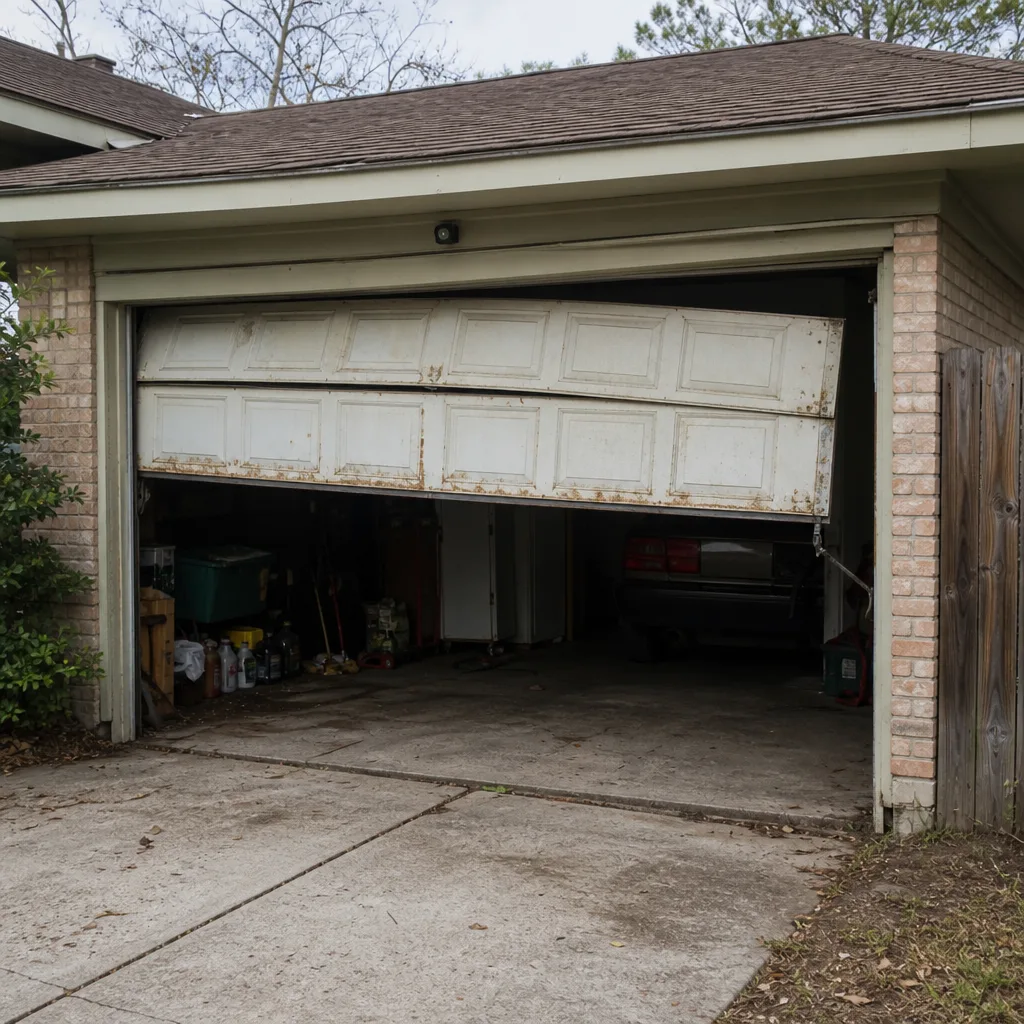 Before
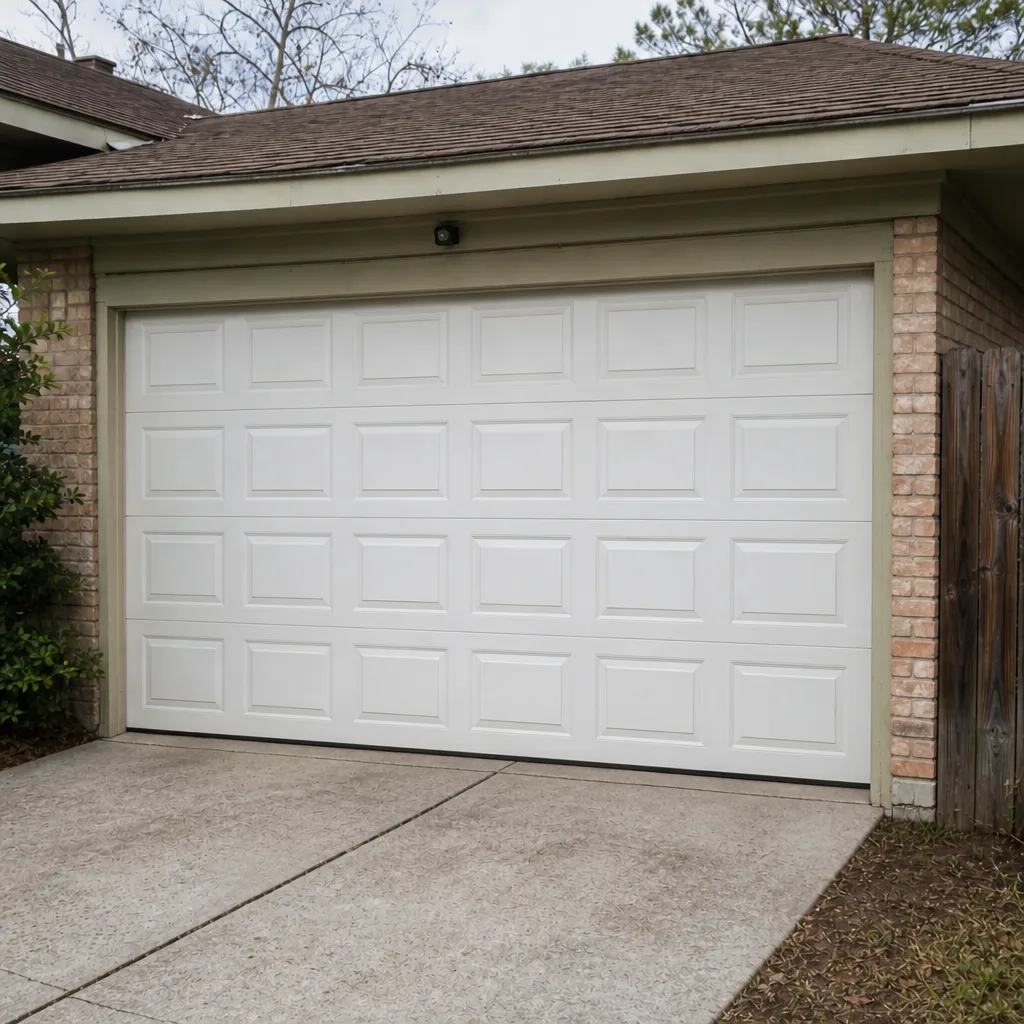 After
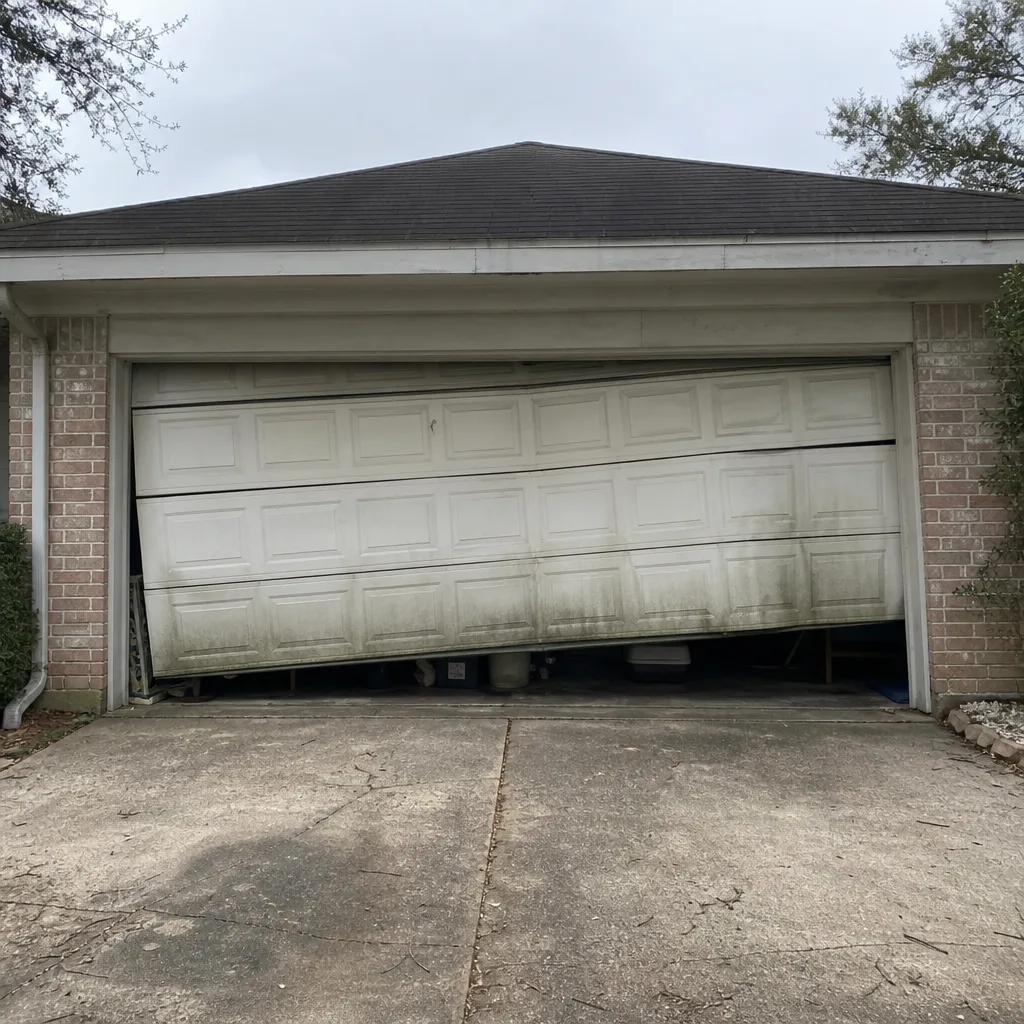 Before
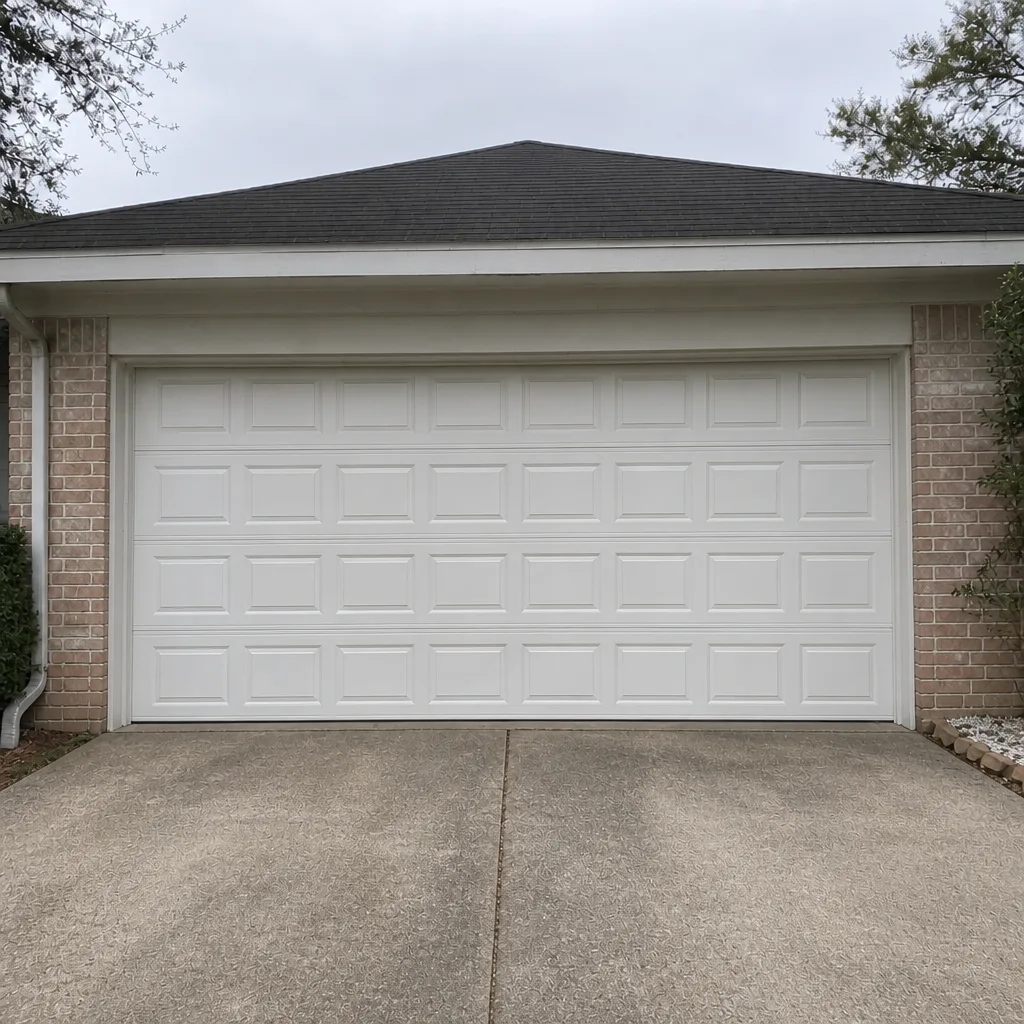 After
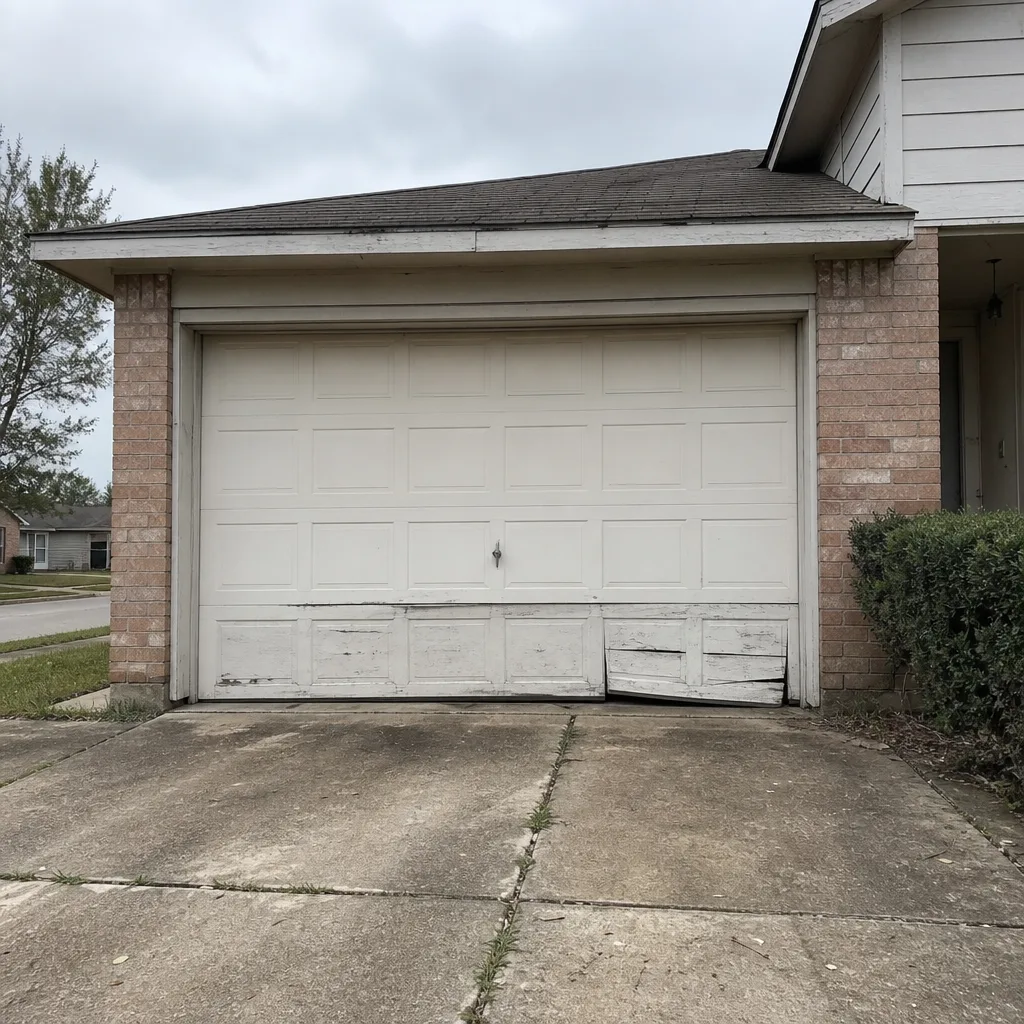 Before
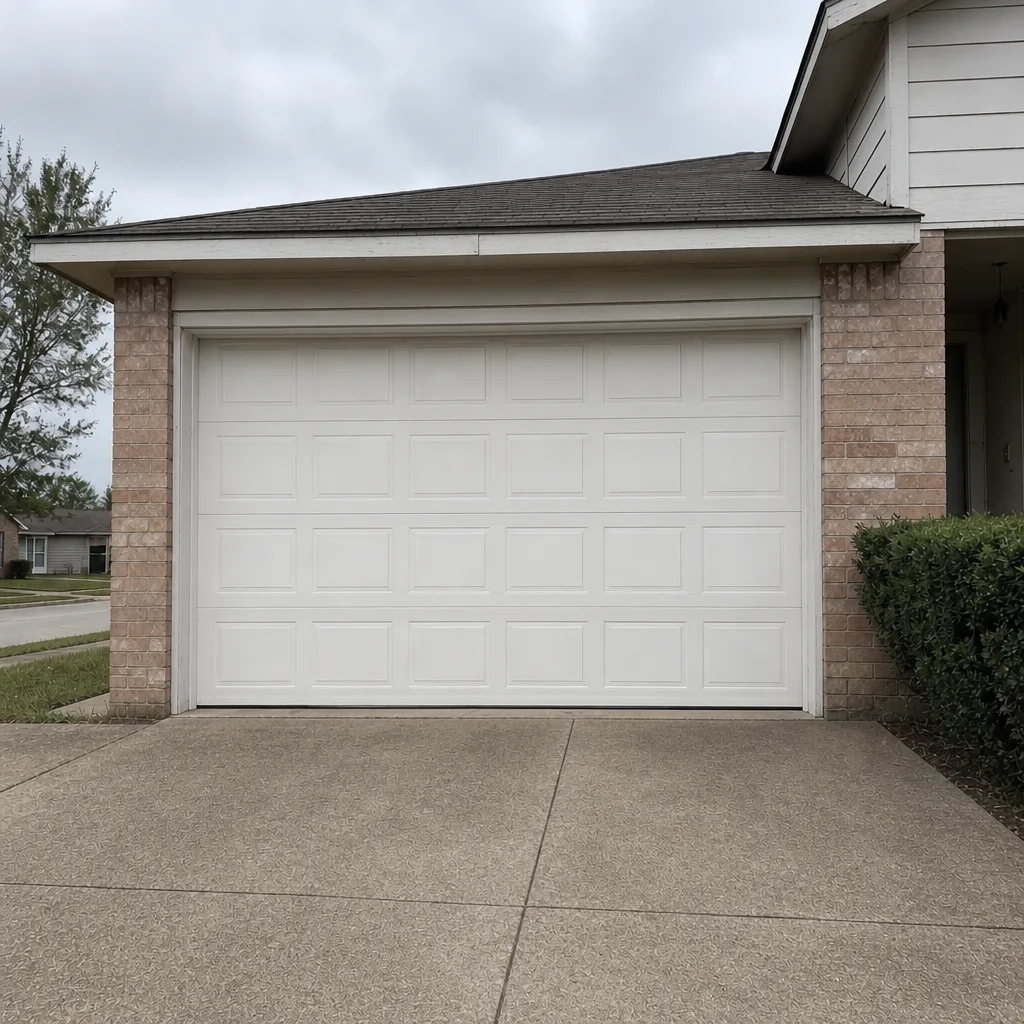 After
Common Mistakes to Avoid
- Using screwdrivers instead of winding bars on a torsion spring. Screwdrivers don’t fit properly and can slip out of the winding cone under load, releasing the spring and the door at the same time. Always use the correct tools – or better, don’t do it at all.
- Replacing one spring when both are the same age. A matched pair wears together. Replacing only the broken one leaves the older spring carrying double the load, and it usually fails within a few months – a common cause of repeat calls in Atascocita.
- Skipping the safety cable on a torsion system. The containment cable inside the spring is what stops a broken spring from whipping. Reinstalling a spring without re-running that cable removes the safety buffer.
- Adjusting opener force limits to compensate for a stiff door. Cranking up the force limits on a LiftMaster or Chamberlain opener so it can push through a binding door is the fastest way to burn out the opener’s gears. Fix the door, not the opener.
- Yanking the manual release on a door that’s open or partially open. That drops a door that’s supported only by the opener spring. Disengage only when the door is fully closed and supported.
- Ignoring a gap in a torsion spring. A visible gap of a quarter-inch or more means the spring is already cracked and will fail soon. That door should not be operated until the spring is replaced.
- Buying hardware-store springs without matching weight rating. A spring rated for a lighter or heavier door than yours creates an imbalance that stresses both the door and the opener – often visible only after the opener fails.
When to Call a Professional
Call a professional when the job involves a broken spring, a snapped or slipped cable, a door that’s off its tracks, a bent track, a door that’s sagging on one side, or any opener problem beyond remote pairing. Those are the jobs where stored energy, weight, and mechanical precision make the difference between a repair and a hazard – and where a wrong attempt tends to damage other components, which costs more than starting fresh.
Atascocita Garage Door Repair Pros offers free estimates, and we work on both repair and full replacement. Our technicians have up to 9 years of experience and are familiar with the major brands you’ll find on Atascocita doors, from LiftMaster openers to Clopay and Wayne Dalton doors. If you’d like an expert walkthrough of your specific door, call (844) 493-5692 and we’ll schedule a visit. One call covers it – repair, opener service, spring work, or a new door.
Frequently Asked Questions
Not safely. Torsion springs store roughly 100 foot-pounds of torque, and winding or unwinding one requires controlling that stored energy with proper winding bars – a slip can cause serious injury in under a second. This is one of the few garage door jobs where professional intervention is genuinely non-negotiable, and it’s the main reason garage door spring repair is a specialist task. Call (844) 493-5692 if you suspect a spring problem in Atascocita; estimates are free.
Lubrication, weatherstrip replacement, remote reprogramming, manual release operation, and visual inspections are all safe homeowner tasks. None of them involve stored energy, heavy components, or delayed-failure risk. New door installation, opener replacement, spring work, cable work, and track repair should all go to a technician.
Usually yes, on the invoice – but the comparison isn’t just the part cost. Incorrect installation can damage the opener, the track, or the door, and the recovery cost often exceeds the original professional repair. Spring work, cable work, and opener work are the areas where DIY ends up more expensive when it goes wrong. Call (844) 493-5692 for an exact quote before you decide; our estimates are free.
Look for a visible gap in the torsion spring, a door that feels heavier than usual to lift, or a door that hesitates before opening. Any of those means the spring is compromised. Stop operating the door and call a technician. Don’t attempt to test the spring yourself – the fail mode is violent.
Emergency garage door service is a named offering for us, and we take it seriously. If your door won’t open or close at an inconvenient hour, call (844) 493-5692 and we’ll book you in. Even a failed garage door opener repair call gets the same care as a scheduled one – the response is just faster.
For a new install, stick with brands your local technician works on regularly and that have parts available locally. LiftMaster and Chamberlain are the two most common in this area, and both offer modern smart-home integration. Craftsman and Raynor are also common on older Atascocita doors. We work on all four, along with Clopay, Amarr, Genie, and Wayne Dalton, so brand choice won’t limit your service options.
Often a single damaged panel can be replaced without swapping the whole door, and that’s usually the less expensive option. Whole-door replacement makes sense when multiple panels are failing, the door is out of alignment beyond what a technician can adjust, or you’re upgrading to a more insulated door. Either way, the estimate should be quoted before any work starts.
The Bottom Line
DIY and professional aren’t opposites – they’re a spectrum. Lubrication, weatherstripping, remote reprogramming, and manual release are safe homeowner territory and worth doing. Torsion springs, cables on a live spring system, and anything involving a door off its tracks or a failed opener should go to a trained technician. That line isn’t about skill or pride – it’s about stored energy and liability, and treating those two realities honestly is what keeps Atascocita homeowners safe and their doors working. If you’re not sure which side of the line your job falls on, ask. It costs nothing to know. Start with an Atascocita Garage Door Repair Pros call and we’ll walk you through it.
Contact Atascocita Garage Door Repair Pros
Whether you’re stuck with a door that won’t open or you’re planning a new installation, we’re one call away. Atascocita Garage Door Repair Pros covers repair, opener service, spring work, and full new-door installation for every major brand – LiftMaster, Chamberlain, Genie, Clopay, Amarr, Wayne Dalton, Craftsman, and Raynor. Our technicians have up to 9 years of experience, and every estimate is quoted and agreed before any work starts. Call (844) 493-5692 for a free estimate in Atascocita.
Written by the team at Atascocita Garage Door Repair Pros.