Last updated November 21, 2026
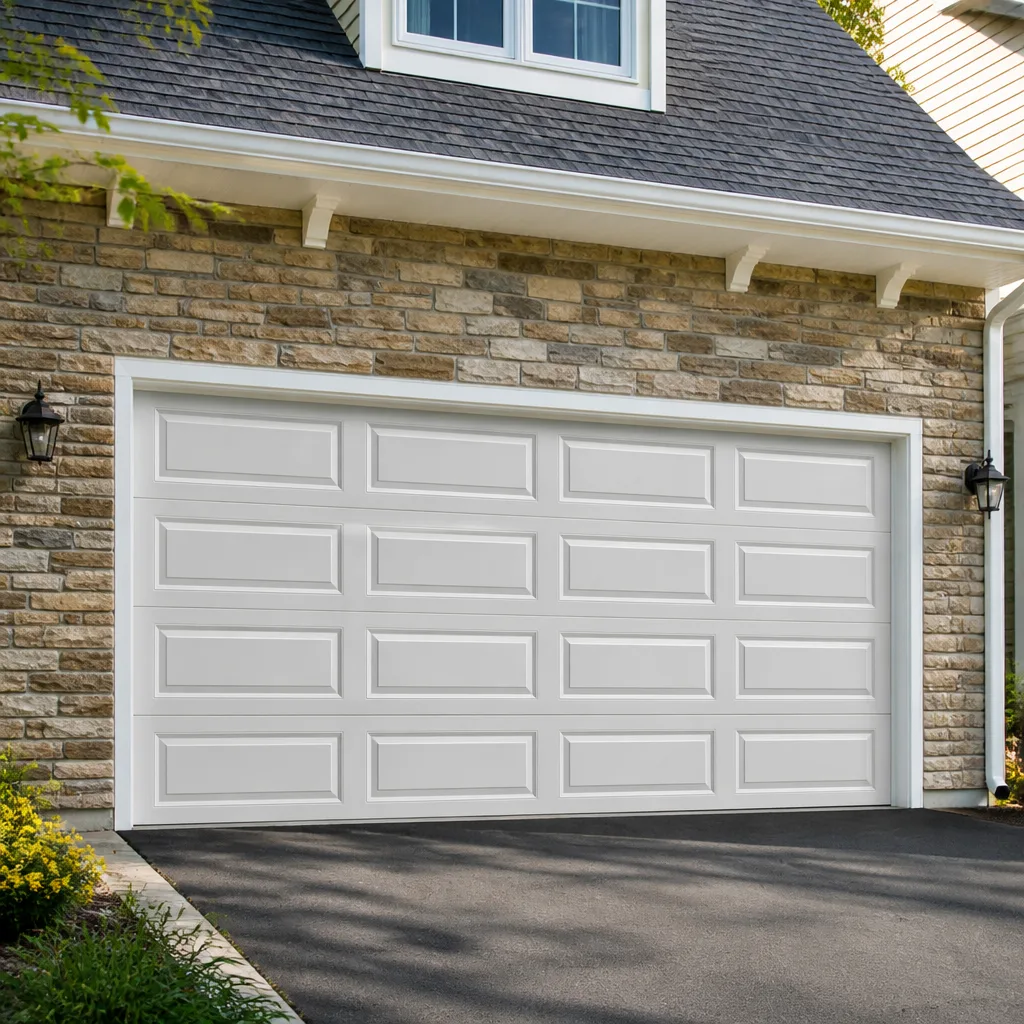 Raised-panel steel
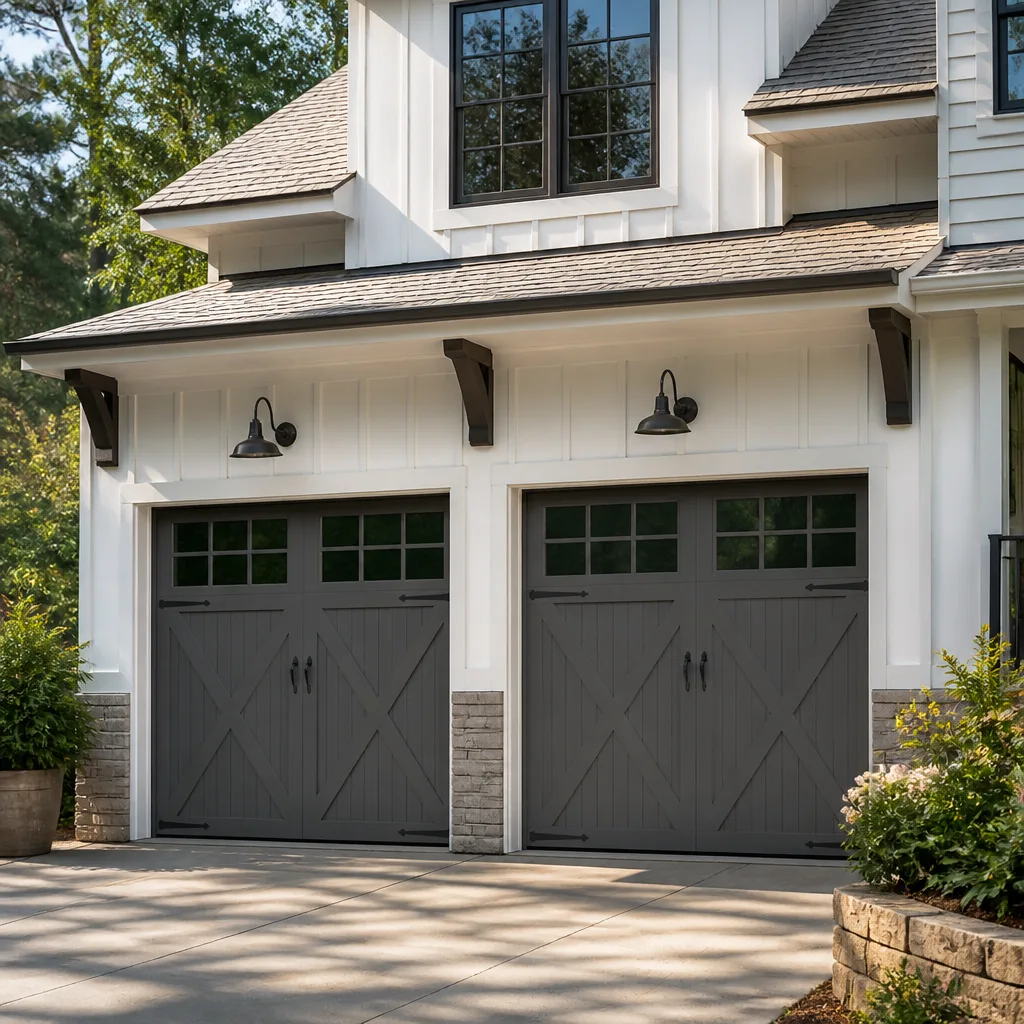 Carriage house
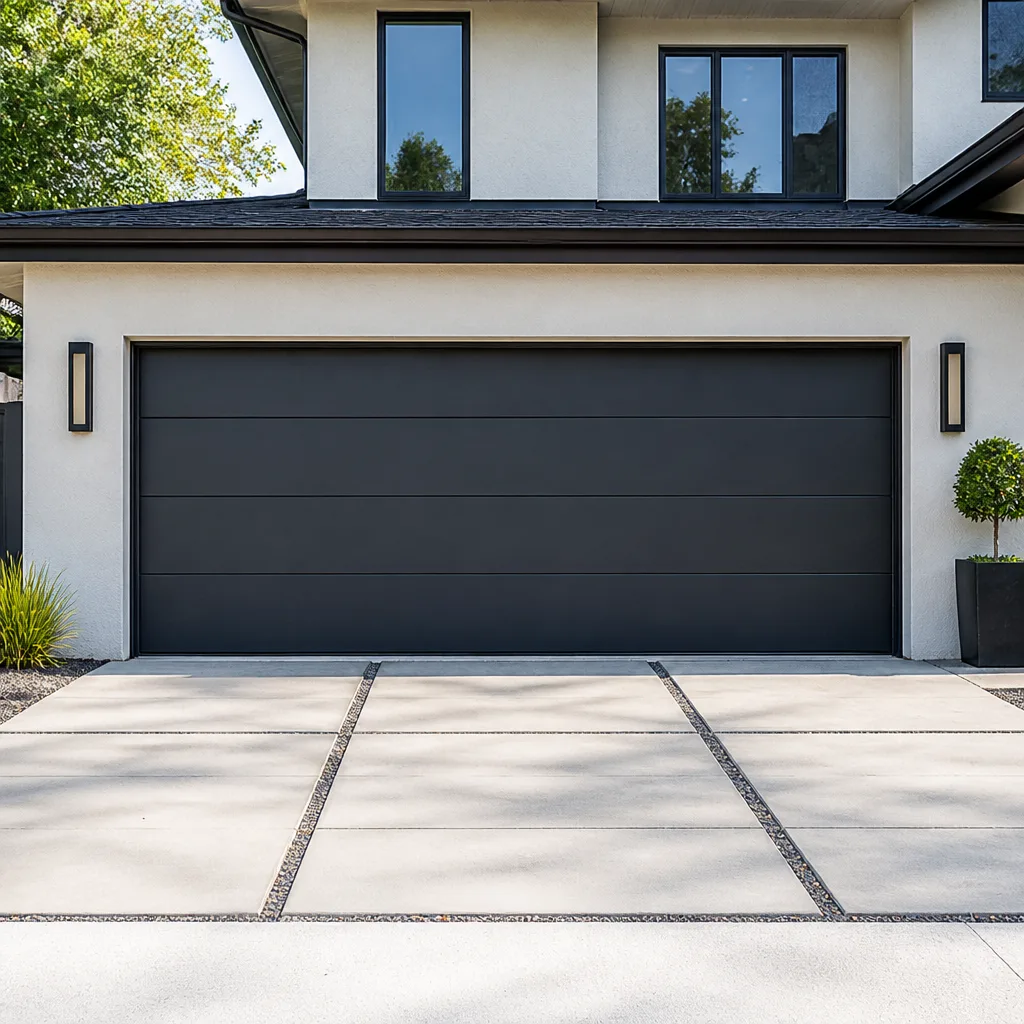 Modern flush
 Full-view glass
 LiftMaster openers
 Chamberlain openers
Full 25-point door and opener safety check with every visit - springs, cables, rollers, tracks, and your LiftMaster or Chamberlain opener included
You get a price before we start. It does not change when the pro arrives.
Get your free estimateChoosing the Right Garage Door Brand: A Buyer’s Guide for Atascocita
The name printed on a garage door panel matters less than what’s behind it. The gauge of the steel skin, the insulation core bonded between the panels, and the cycle rating of the springs the installer hangs all determine whether a door survives a decade of Texas sun and daily use. Most buyers walk into a showroom and pick the shiniest door with the most familiar logo. That’s backwards. In an Atascocita summer, with humidity that hangs on for weeks and sun hitting west-facing doors from early afternoon until dark, construction specs beat brand marketing every time. This guide teaches you to read a manufacturer spec sheet for the three numbers that actually predict longevity, compares the major brands on those metrics, and explains why the springs matter as much as the door. You’ll also learn how to spot an upgrade sale that’s really a downgrade.
Quick Answer
The right garage door brand in Atascocita is the one whose door meets three specs: a wind load rating appropriate for your exposure, an insulation R-value suited to an attached or climate-controlled garage, and a steel gauge matched to how often you cycle the door. Clopay, Amarr, Wayne Dalton, and CHI all make solid doors. Which model is right for you depends on your construction, not on which company has the bigger advertising budget.
Styles & brands we work with
- Raised-panel steel
- Carriage house
- Modern flush
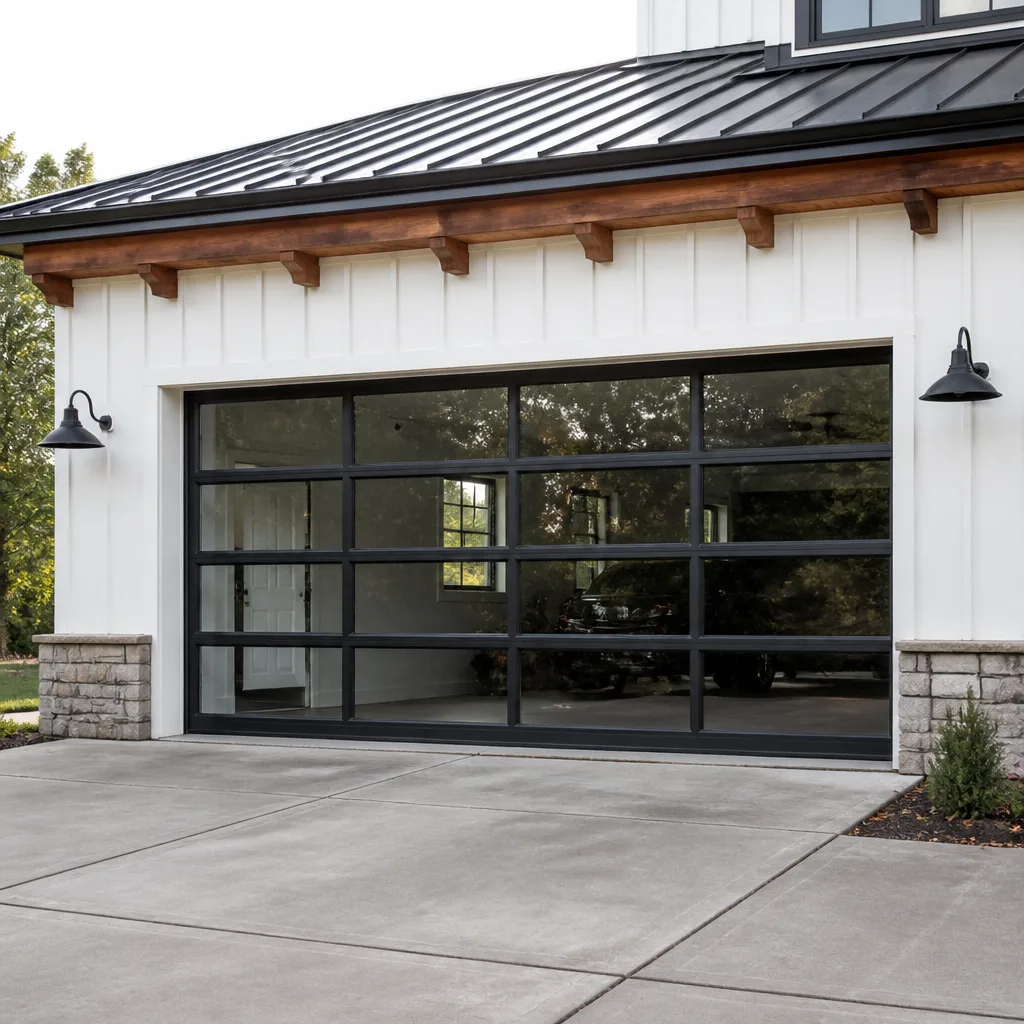
- Full-view glass
- LiftMaster openers
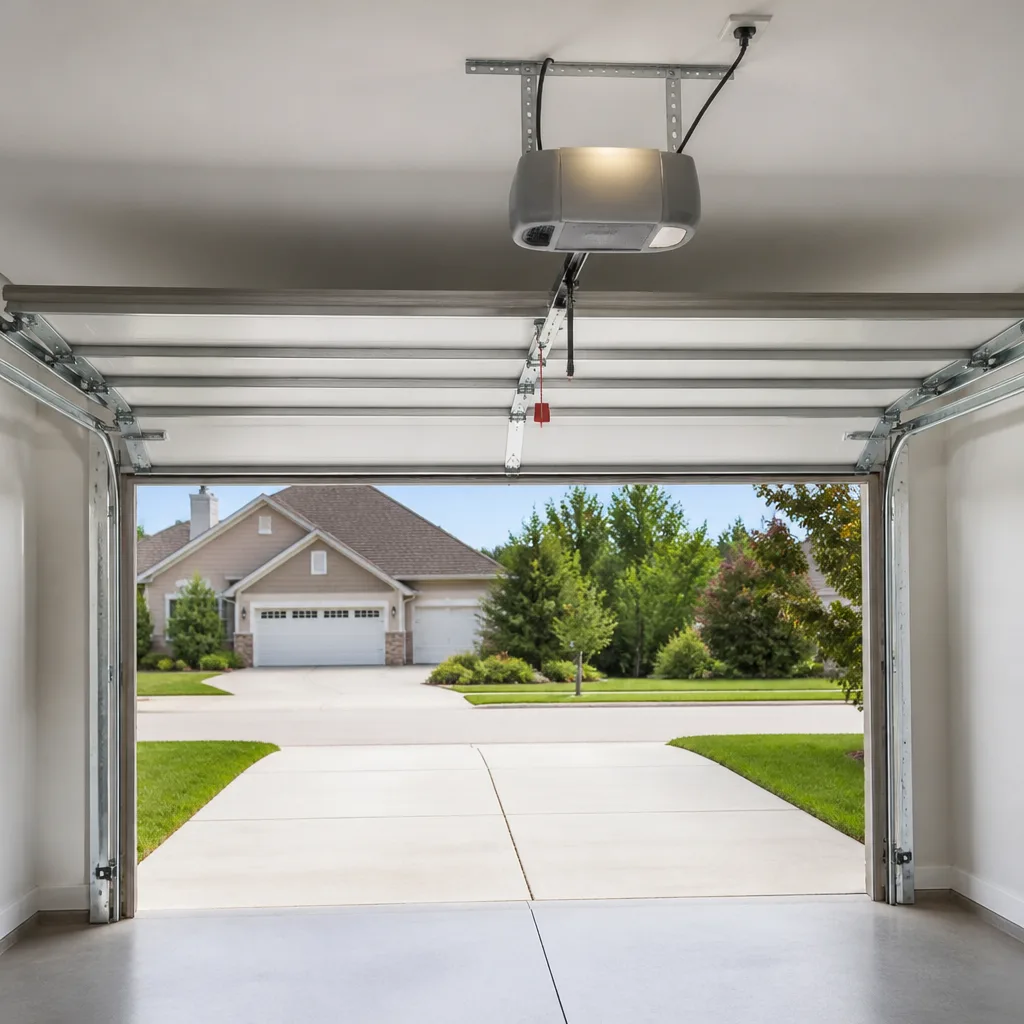
- Chamberlain openers
Table of Contents
- How to Read a Garage Door Spec Sheet
- Comparing the Major Brands on the Metrics That Matter
- Wind Load Ratings and Harris County Code
- Insulation R-Value and Garage Heat in Atascocita
- Residential vs. Light-Commercial Hardware: Choosing the Right Duty Rating
- Why the Springs Matter More Than the Door
- Matching Your Opener to Your New Door
- What to Expect During Installation
How to Read a Garage Door Spec Sheet
Manufacturers publish spec sheets for every door line they sell. Most homeowners never look at them. The three numbers below tell you more about how a door will perform in Atascocita than any brochure or display model.
- Insulation R-value. This measures thermal resistance. A single-layer steel door with no insulation scores around R-1. A double-layer door with a polystyrene core typically lands between R-4 and R-6. A triple-layer door with polyurethane foam can reach R-12 or higher. The higher the number, the less heat transfers through the door into or out of the garage.
- Wind load rating. This is expressed in miles per hour and sometimes as a pressure rating in pounds per square foot. A door rated for 90 mph wind is not the same product as one rated for 110 mph or higher. Local building departments in unincorporated Harris County and the City of Houston both care about this number when a permit is required.
- Steel gauge. Lower gauge numbers mean thicker steel. Most residential doors use 24-gauge or 25-gauge steel. Light-commercial doors often use 20-gauge or 22-gauge. Thicker steel resists dents, holds panel shape better in heat, and supports heavier insulation without the panel sagging over time.
A fourth number is worth checking: the cycle rating on the door’s hinges and rollers. Standard residential hardware is typically rated for around 10,000 cycles. Higher-grade hardware runs higher. If you open and close your door six or eight times a day, that standard hardware will wear out in a few years. We’ll cover that in the duty-rating section below.
When you’re comparing quotes, ask each seller for the actual spec sheet on the door they’re proposing. If they can’t produce one, that tells you something about the job they’re running. Our technicians have up to 9 years of experience reading these sheets across every major brand, and we’re happy to walk through one with you before you commit to anything.
Comparing the Major Brands on the Metrics That Matter
Clopay, Amarr, Wayne Dalton, and CHI are four of the biggest names in residential garage doors. Each makes a range of products, from builder-grade single-layer doors to insulated triple-layer doors with decorative hardware packages. Comparing the brand names tells you almost nothing. Comparing the specific product lines tells you everything.
Clopay
Clopay’s line runs from the entry-level Classic to the premium Gallery and Modern Steel collections. Their polyurethane-insulated doors are among the best performers on thermal resistance, reaching R-12 or higher on top models. They also publish wind-load certification for models tested to specific mph thresholds. If your priority is thermal performance in an attached garage next to living space, Clopay’s insulated options are worth serious consideration.
Amarr
Amarr makes a strong range of insulated and non-insulated doors, with a focus on durability and clean panel profiles. Their wind-load testing information is generally available on the spec sheets, and their higher-end lines compete directly with Clopay on R-value. Amarr doors tend to be a solid value in the middle tier, where you get a three-layer insulated door without the premium price attached to a designer series.
Wayne Dalton
Wayne Dalton is probably best known for its foam-injection manufacturing approach, where polyurethane is injected between the panels rather than laid in as a slab. This produces a very rigid door with a high R-value and fewer cold (or hot) spots where the metal touches the interior. Wayne Dalton also sells the TorqueMaster spring system on some models, which encloses the torsion spring inside a tube. That contains a spring that fails, which is a real safety benefit, though it also makes some spring repairs a different kind of job.
CHI
CHI is a Texas-based manufacturer, which means its doors are built for climates like ours. Their insulated lines offer good R-values, and they’ve been a common choice in new construction across the Houston metro area. CHI doors tend to be straightforward workhorses: solid construction, competitive insulation, and parts that our technicians can source without special order delays.
Corrosion warranties: read the fine print
In a humid sub-tropical climate like Atascocita’s, corrosion resistance matters. Most major brands offer a corrosion or paint finish warranty on their steel doors. Pay attention to what’s actually covered and for how long. Some warranties cover the steel substrate against rust-through, but not the paint finish fading or chalking. Others exclude corrosion that starts at field-cut holes or at the bottom edge where the door meets a wet sill. Steel-gauge thickness also plays a role: thicker steel resists surface rust better than 25-gauge because it has more material to lose before failure. Read the warranty document, not the marketing page. Ask what happens if the bottom panel rusts out in year seven.
Across all four brands, the practical takeaway for Atascocita buyers is the same: pick the product line by spec, not by the logo. A mid-tier insulated door from any of these manufacturers will outperform a bargain basement single-layer door from a brand with better name recognition.
Wind Load Ratings and Harris County Code
Wind load is the one spec homeowners most often skip and later wish they hadn’t. A garage door is the largest opening in your house. When wind pressure pushes against it, every part of the door’s construction, and the hardware that holds it in the opening, has to resist that load. A door rated for 90 mph and a door rated for 130 mph look similar on the showroom floor but are not the same product underneath.
Post-Harvey construction standards in the Houston region tightened wind-load requirements for new builds and remodels. In unincorporated Harris County and inside the City of Houston, permitted residential projects typically require a door certified to a specific design pressure based on the home’s exposure category and the wind speed map for that area. Contractors provide a wind-load certificate for the door they install, and inspectors may ask for it.
- Check whether your project requires a permit. Replacing a door in the same opening usually does, especially when structural changes or new hardware are involved. Call the City of Houston permitting office or Harris County for your jurisdiction before you buy.
- Ask for the wind-load certificate from the manufacturer. It should show the tested mph or pressure rating and the specific model number it applies to. A certificate that doesn’t name the model isn’t useful.
- Match the rating to your exposure. Clopay, Amarr, Wayne Dalton, and CHI all offer models with wind-load certification. Make sure the certification covers the door size you’re buying, since ratings often change by width and height.
- Have the installer provide the certificate at completion. Keep it with your home records. If you ever sell the house or file a claim, that paperwork matters.
If wind load wasn’t specified on your original door and you’re replacing it, ask for a certified model anyway. The price difference between a non-certified and a certified door is usually smaller than people expect, and the certification is a permanent upgrade to the home.
Insulation R-Value and Garage Heat in Atascocita
An uninsulated garage door in an Atascocita summer turns your garage into a heat box. The steel panel absorbs solar gain on the exterior and radiates it inward. Sun through the door heats the interior surfaces, the slab absorbs warmth, and the whole space stays several degrees above outdoor air temperature through the afternoon. If the garage shares a wall or ceiling with conditioned living space, that heat finds its way inside through the shared surfaces, and your air conditioner runs longer to make up for it.
The fix is insulation. Here’s how the R-values break down in practice:
- Single-layer steel (R-1 or less): Common in builder-grade homes. Loud, hot in summer, prone to condensation on the interior face in humid weather.
- Double-layer steel with polystyrene core (R-4 to R-6): A meaningful improvement. Quieter, cooler, and less prone to condensation. Good middle-ground option for detached garages where the space isn’t conditioned.
- Triple-layer steel with polyurethane core (R-8 to R-12+): Best thermal performance. Quieter still. The right choice for an attached garage that shares walls or ceilings with living space, or for a garage used as a workshop or home gym.
Higher R-value also reduces condensation on the interior of the door during humid stretches. When cool conditioned air meets the warm interior face of a thin steel door, moisture collects and drips. Over time, that moisture works at the hardware and the bottom seal. A well-insulated door stays closer to ambient temperature and doesn’t sweat. For Atascocita homes where the garage sits on the west or south side of the house and takes the brunt of the afternoon sun, this matters even more. If the door faces west, choose the highest R-value you can justify within budget.
If you’re tackling this replacement as part of a broader repair project, our garage door repair team can assess whether the existing door and hardware are worth upgrading or replacing outright. Sometimes insulation alone doesn’t solve the problem if the door’s hardware is already worn out.
Residential vs. Light-Commercial Hardware: Choosing the Right Duty Rating
A standard residential door is designed for a certain number of open-close cycles per day. If your usage pattern is higher than that, the door will fail early. Knowing your usage pattern before you buy is the single best defense against being sold a door that’s under-engineered for your household.
Most residential hardware is rated for around 10,000 cycles. Divide that by your daily cycles and you get an estimate of how long the door will last under normal use. A household that opens the door twice a day will get many years out of standard hardware. A household with a teen driver coming and going multiple times a day, plus a homeowner who uses the garage as the primary entry, plus a delivery pattern that means opening for packages, can easily hit ten or more cycles a day. At that usage, standard residential hardware wears out faster than most homeowners expect.
Light-commercial hardware addresses that. Higher cycle-rated hinges, thicker gauge steel, heavier-gauge torsion springs, and commercial-grade rollers all extend service life. If any of the following apply to you, ask about light-commercial duty before you order:
- You open the door more than six times a day on average.
- The door faces west or south and gets many hours of direct sun every afternoon.
- You have a teen driver, a home business, or regular guests using the garage entry.
- You plan to stay in the home long-term and want the door to last decades, not years.
- The opening is wider than a standard double-car door, which puts more stress on the panels and hardware.
Upgrading to light-commercial duty doesn’t mean buying an industrial-looking door. Many manufacturers offer residential door panels with commercial-grade hardware underneath. Ask your installer specifically what hardware comes with the door, and compare the cycle ratings on the hinges, rollers, and springs.
Why the Springs Matter More Than the Door
A new garage door is only as safe and durable as the springs lifting it. On a standard residential door, the springs carry the weight of the door, not the opener. A door that weighs 150 pounds might feel like 10 pounds in your hand because the springs are doing almost all the work. When a spring reaches the end of its cycle life, it breaks, and the door becomes very heavy and dangerous very quickly.
Springs have a cycle rating just like hardware. A standard torsion spring might be rated for around 10,000 cycles. Higher-cycle springs are available at a higher cost and last longer before they need replacing. On a door that cycles six times a day, that lifespan works out to a few years of service. On a door that cycles ten times a day, it’s less.
Two more facts about springs matter for Atascocita buyers:
- Springs are matched to door weight. If you upgrade to a heavier insulated door, the original springs won’t lift it safely. A matched pair goes on the new door in the same job. This is why a new-door installation always includes springs matched to the new door’s weight, and why reusing old springs on a heavier door is a mistake.
- High-tension springs are genuinely dangerous. A torsion spring under load stores enormous energy. Touching the wrong adjustment, winding a spring past spec, or trying to release a snapped spring without the proper winding bars can cause serious injury. This is not a DIY repair. Our garage door spring repair technicians work with both torsion and extension springs and treat every spring job with the safety margin it demands.
Ask for the cycle rating on the springs being installed with your new door. Ask whether a higher-cycle spring is available as an upgrade. The price difference is usually modest compared to the cost of a spring replacement a few years later, and on a door that cycles a lot, it pays for itself.
Matching Your Opener to Your New Door
Your opener and your door have to work as a system. Replacing the door on a tired opener is a common mistake, and it usually shows up as a door that works fine for a few months and then starts straining. The opener has to lift a door that’s now heavier, or a door with different balance characteristics, and a motor sized for the old door may not be sized for the new one.
Two things to check when you’re replacing the door:
- Horsepower and lift rating. An opener rated for a 7-foot door of a certain weight may not be rated for a heavier insulated replacement. Ask your installer to confirm the opener’s lift rating meets the new door’s weight.
- Age and condition. A 15-year-old opener may be near the end of its useful life. Replacing it at the same time as the door is often more economical than replacing it separately, and it lets you step up to a modern smart-home-capable unit.
If you’re stepping up to a smart-home opener, LiftMaster and Chamberlain both make Wi-Fi-connected units in the myQ ecosystem that let you open, close, and monitor the door from your phone. Those are common upgrades in Atascocita households where someone wants to check the door from work or let in a delivery. We work with those systems specifically, alongside traditional units and the Genie Aladdin Connect platform. If your existing opener needs work rather than replacement, our garage door opener repair team can diagnose the specific fault, whether it’s a logic board, a travel limit, or a remote issue.
What to Expect During Installation
A new-door installation is a half-day to full-day job in most cases, depending on the number of doors and whether the opener is being replaced at the same time. Here’s the general process:
- Measure and confirm. The installer re-measures the opening, the headroom above it, and the side room on each side. Springs, tracks, and the door panel sizes are all spec’d from these numbers, not from the sales brochure.
- Remove the old door and hardware. The old panels and tracks come down. Springs come off first, and safely.
- Install the new tracks and spring system. Tracks are leveled and secured to the framing. Springs are mounted and wound to the correct tension for the door’s weight.
- Hang the panels. Panels are assembled, hinges and rollers go on, and rollers are set into the tracks.
- Balance and adjust. The door is balanced so it opens and closes smoothly by hand, and the opener travel limits and force settings are adjusted to match.
- Test the safety systems. The photoelectric eyes and the auto-reverse function are tested with an obstruction. This is not optional.
- Walk through the operation. The installer demonstrates the door, the opener, and the safety features, and hands over any paperwork, including the wind-load certificate if one was specified.
If your project requires a permit, get the permitting request in early so the installation isn’t delayed. Your installer can usually help with the paperwork.
Common Mistakes to Avoid
- Buying by brand name instead of spec sheet. Two doors from the same manufacturer can differ by 8 points of R-value and 30 mph of wind rating. Compare the spec sheets, not the logos.
- Skipping the wind-load certificate in unincorporated Harris County. Inspectors may ask for it and a claim may need it. If your permit is in either jurisdiction, ask for the certificate before the installer leaves.
- Putting a heavy insulated door on opener hardware sized for the old door. Confirm the opener’s lift rating meets the new door’s weight before the panels go up.
- Reusing the old springs on a new door. Springs are matched to door weight. A heavier door with old springs is a safety problem, not a savings.
- Choosing the cheapest hardware for a high-cycle household. Standard residential hinges and rollers rated for 10,000 cycles are not a fit for a household opening the door a dozen times a day.
- Ignoring which side of the house the door faces. A west-facing door gets sun all afternoon. That argues for a higher R-value and a heavier gauge than an east-facing door of the same size.
- Letting the old opener drag a new door. Aging openers strain against a new door and fail early. Match the opener to the door, or replace both together.
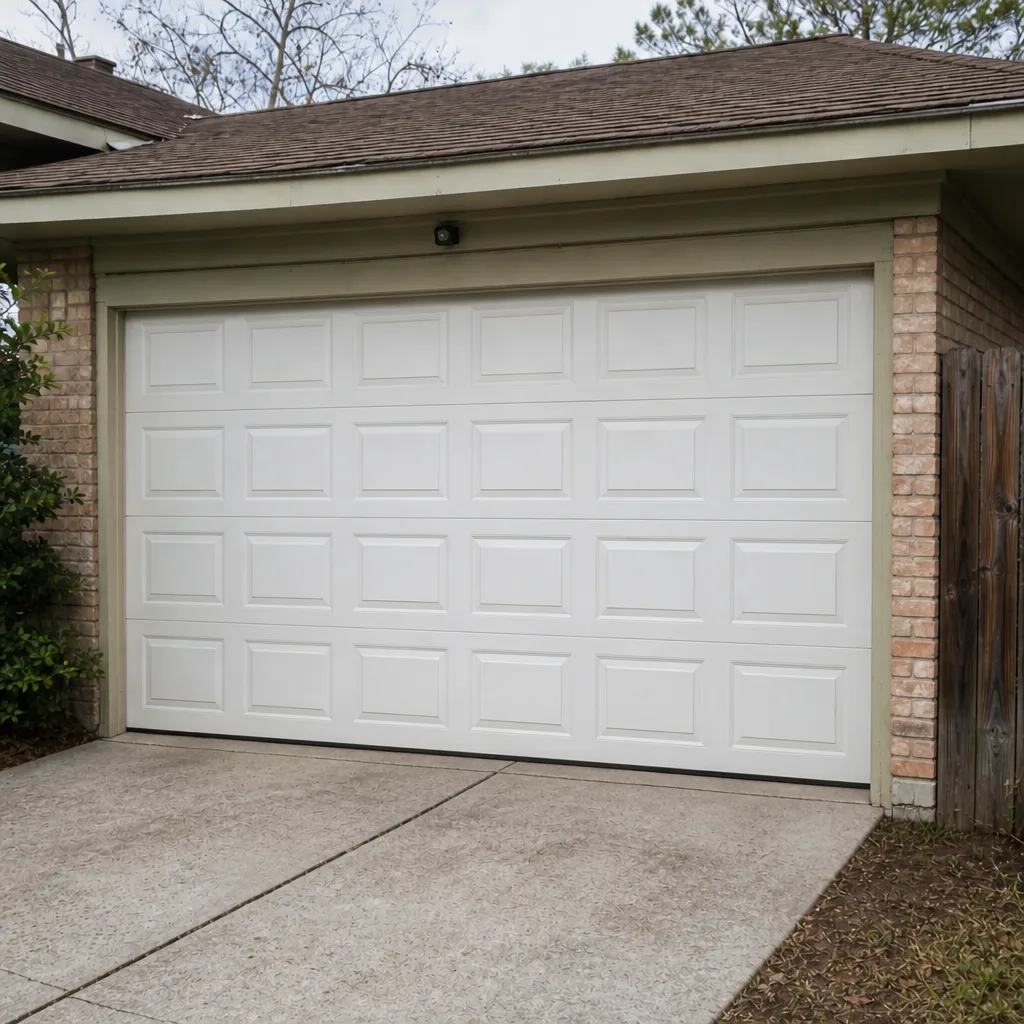
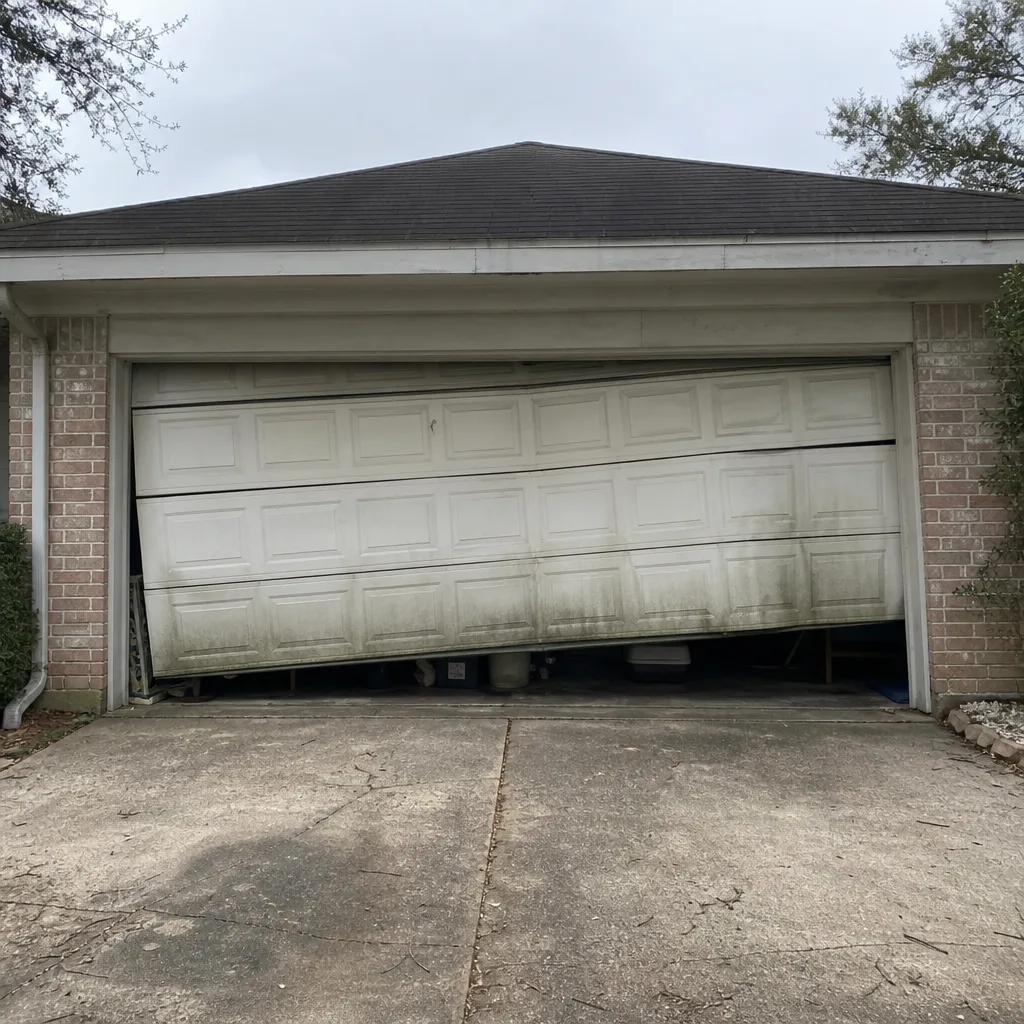
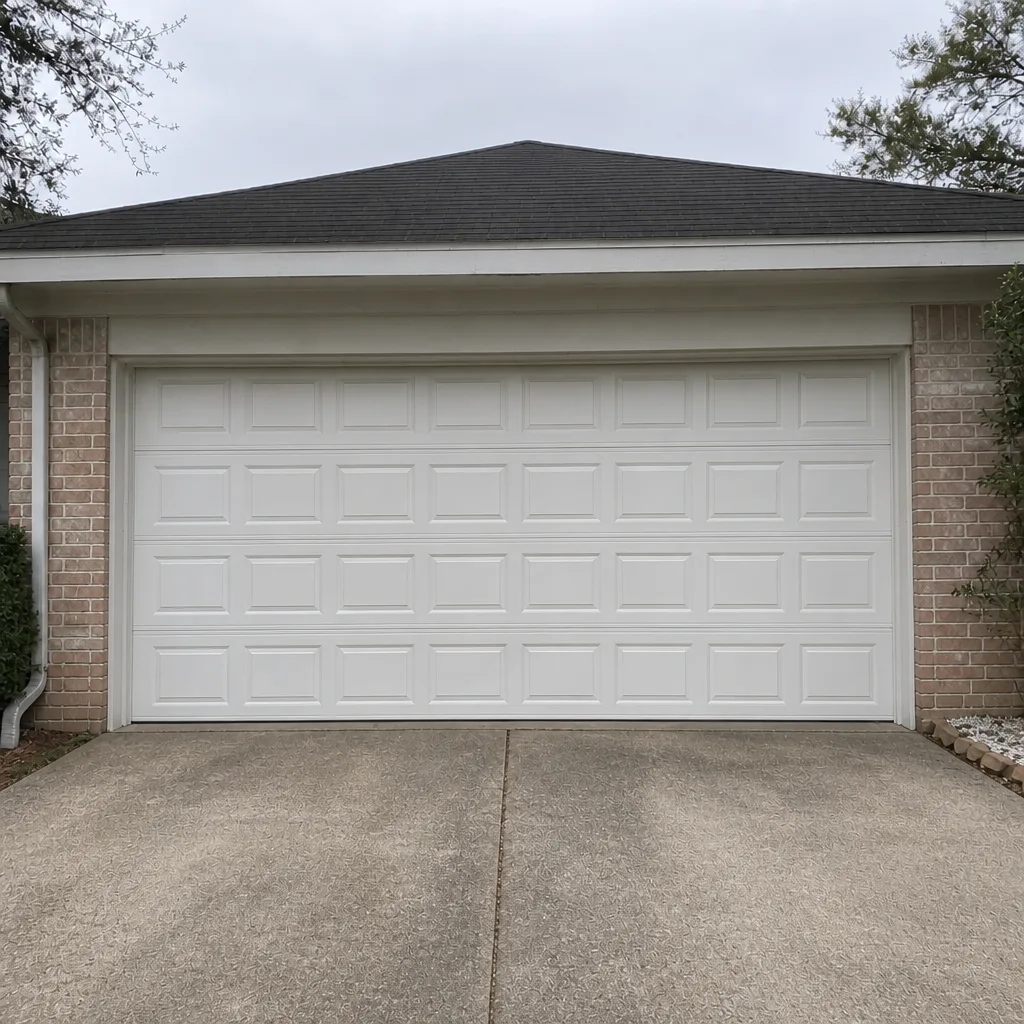
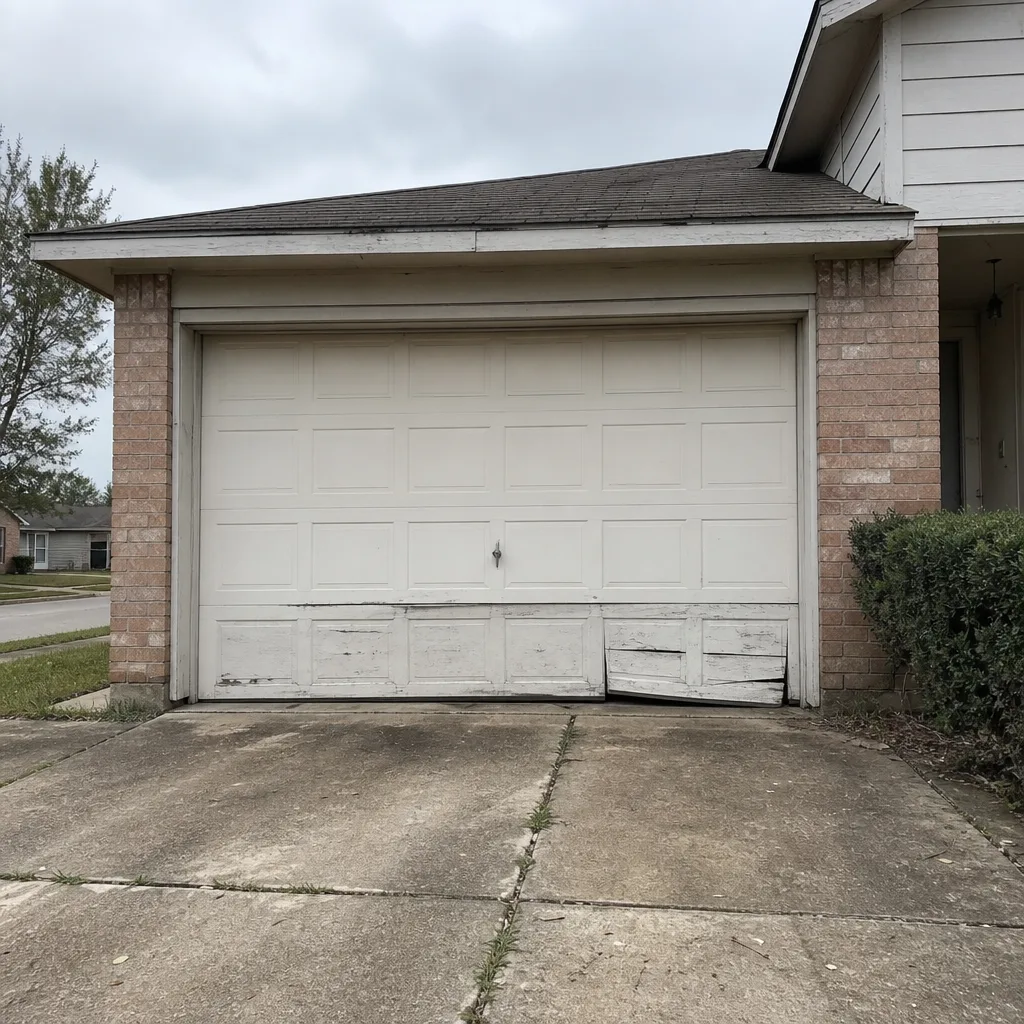
See the difference
 Before
 After
 Before
 After
 Before
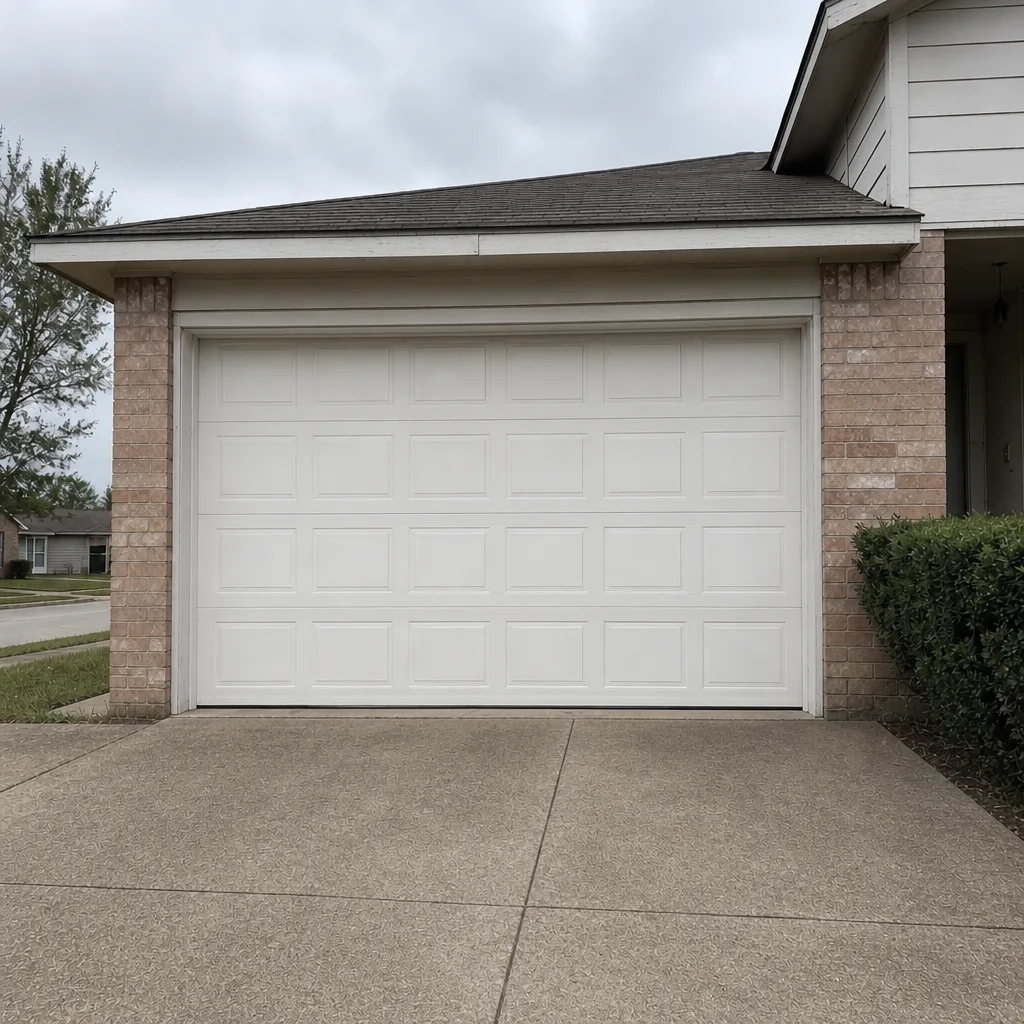 After
When to Call a Professional
Call a trained technician when the job involves springs, when it involves replacing an opener on a door that’s already struggling, when the door is off its tracks, or when you’re building a new door installation from the ground up. Springs are the number one reason this isn’t a DIY project: they’re under enough tension to cause serious injury, and the wind on a torsion spring has to be done with the right winding bars and the right count. Panels and track can be adjusted, but a door off the tracks, or a broken spring, needs a trained technician. If your door won’t open or close at all, that’s an emergency call in its own right, and we run emergency service as a named offering rather than an upsell. Atascocita Garage Door Repair Pros offers free estimates in Atascocita – call (844) 493-5692. Our technicians work on all eight major brands: LiftMaster, Chamberlain, Genie, Clopay, Amarr, Wayne Dalton, Craftsman, and Raynor. If your door is already open when we arrive, we’ll bring it down safely first.
Frequently Asked Questions
There isn’t one best brand, but there are best specs. For an attached, air-conditioned garage in Atascocita, look for a triple-layer insulated door with an R-value of 8 or higher, a wind-load certificate covering your door size, and steel gauge of 24 or heavier. Clopay, Amarr, Wayne Dalton, and CHI all make doors that meet those specs. Which specific model you choose depends on your opening size and how often you open the door. Call (844) 493-5692 for a free estimate based on your actual measurements.
New garage door installation in Atascocita typically runs from about $800 to $2,800 for a standard single-car or double-car door, with insulated and wind-certified models at the higher end and builder-grade non-insulated doors at the lower. Light-commercial hardware, oversized doors, and premium panel styles push the range higher. The written quote sets the final price, and we hold to it once work is agreed. Call (844) 493-5692 for a free written estimate.
Often yes, especially when the project involves a door replacement in an existing opening with new hardware or structural changes. Permit rules vary by jurisdiction and by project scope. Call the City of Houston permitting office or Harris County for your address before you order, and ask your installer for the wind-load certificate the inspector may request.
No, not safely, on a standard torsion-spring door. The springs carry the door’s weight and are under enormous tension. Winding or releasing a spring without the right tools and training can cause serious injury. Panels and track can be adjusted, but a full door replacement involves working with the spring system, and that’s a job for a trained technician. If your existing door is broken, call (844) 493-5692 and we’ll get someone out.
Repair typically makes sense when the door panels are structurally sound and the problem is a spring, opener, roller, or track issue. Replace when the panels are rusted through, badly dented, or your current door is under-spec’d for the job (non-insulated on an attached garage, no wind rating, standard hardware on a high-cycle household). Our team can look at your existing door and give you an honest read before you spend money. Call (844) 493-5692 for a free assessment.
Yes. We work on LiftMaster, Chamberlain, Genie, Clopay, Amarr, Wayne Dalton, Craftsman, and Raynor systems specifically, which means when your Clopay door has a panel issue or your LiftMaster opener is throwing a code, our technicians have seen the specific failure before. Generalist handymen often haven’t. Call (844) 493-5692 if you want a second opinion before your next repair.
The Bottom Line
Brand loyalty won’t keep your garage cool in an Atascocita summer. Specs will. Compare doors on R-value, wind-load certification, and steel gauge, not on the logo. For an attached, conditioned garage, aim for R-8 or higher. For any permitted project in unincorporated Harris County or the City of Houston, ask for the wind-load certificate on the specific model. If your household cycles the door more than six times a day, ask about light-commercial hardware before you buy. And always ask for the cycle rating on the springs going in with the door. Those three specs will predict what a door is worth long after the marketing wears off. Our team is here to walk through any of it with you before you commit. Call (844) 493-5692 for a free estimate.
Written by the team at Atascocita Garage Door Repair Pros.