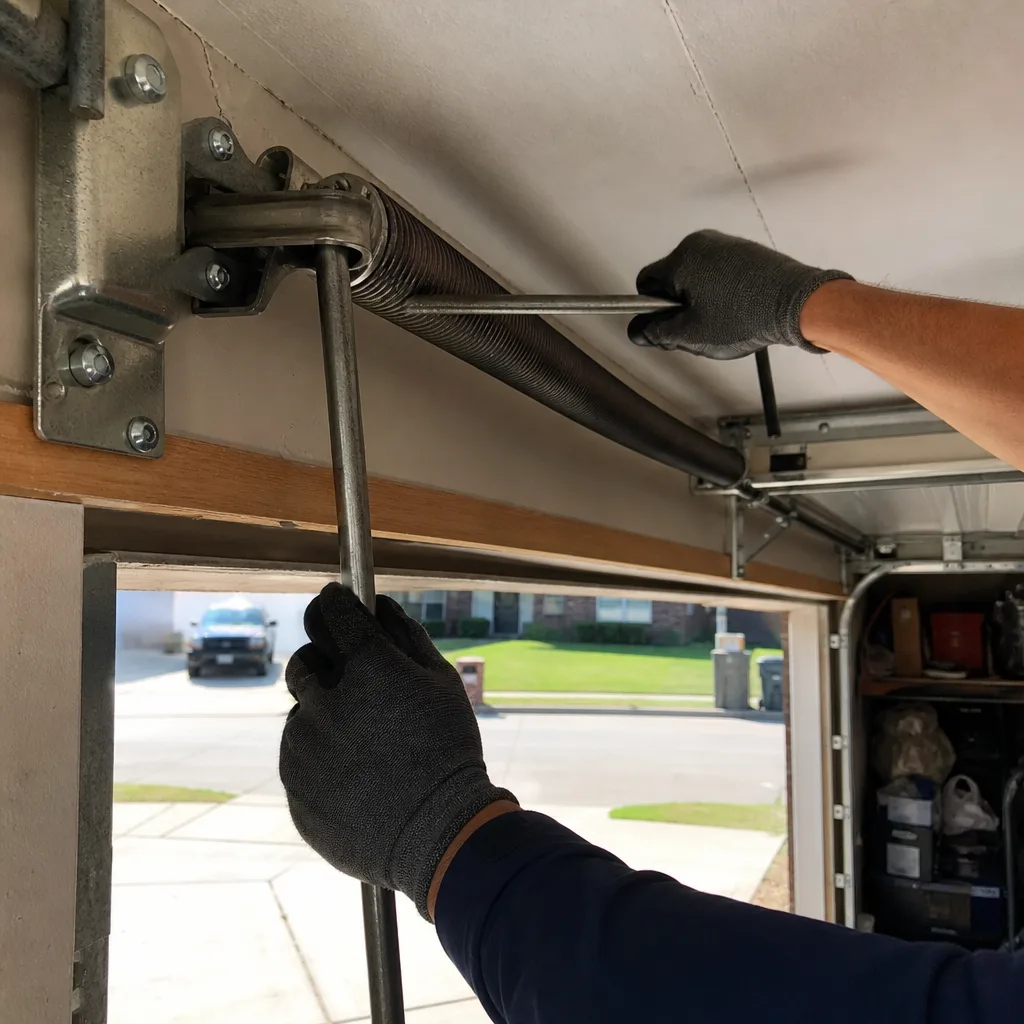
Last updated November 21, 2026
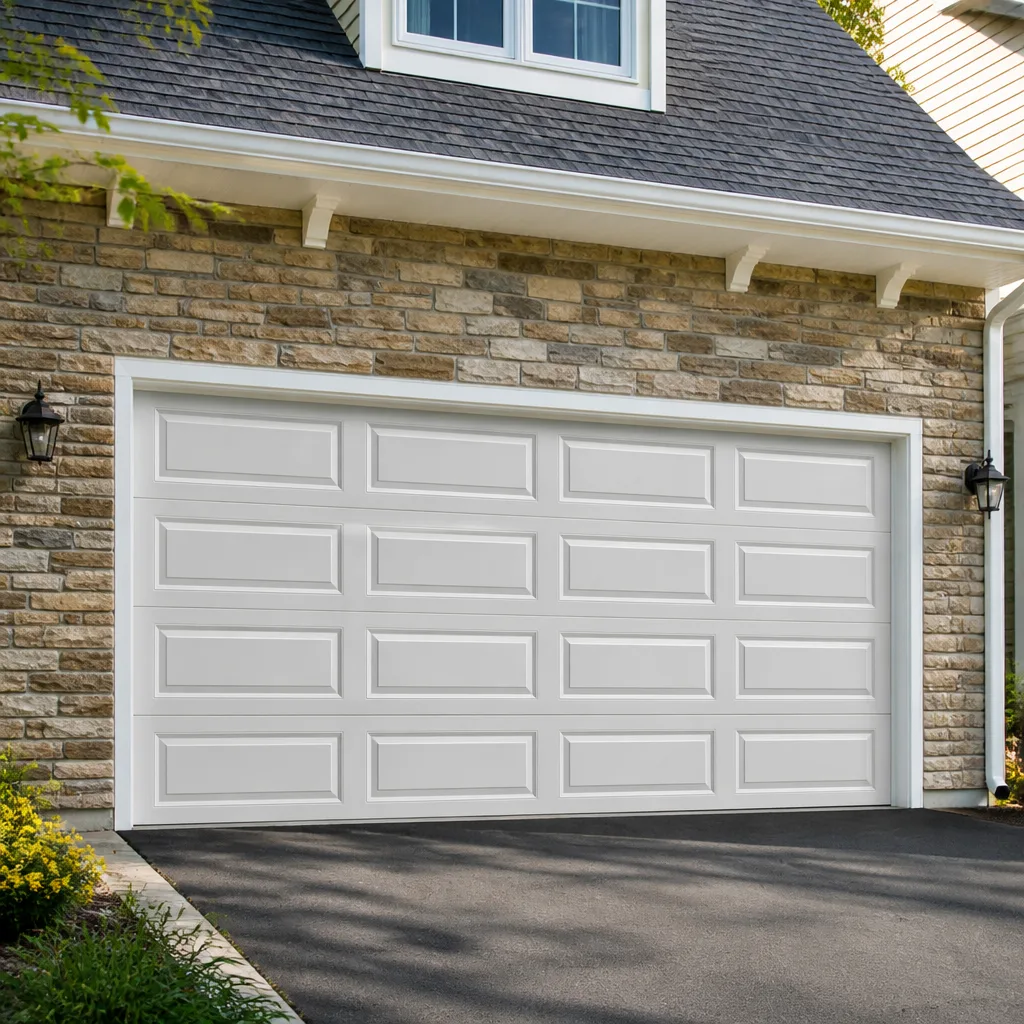 Raised-panel steel
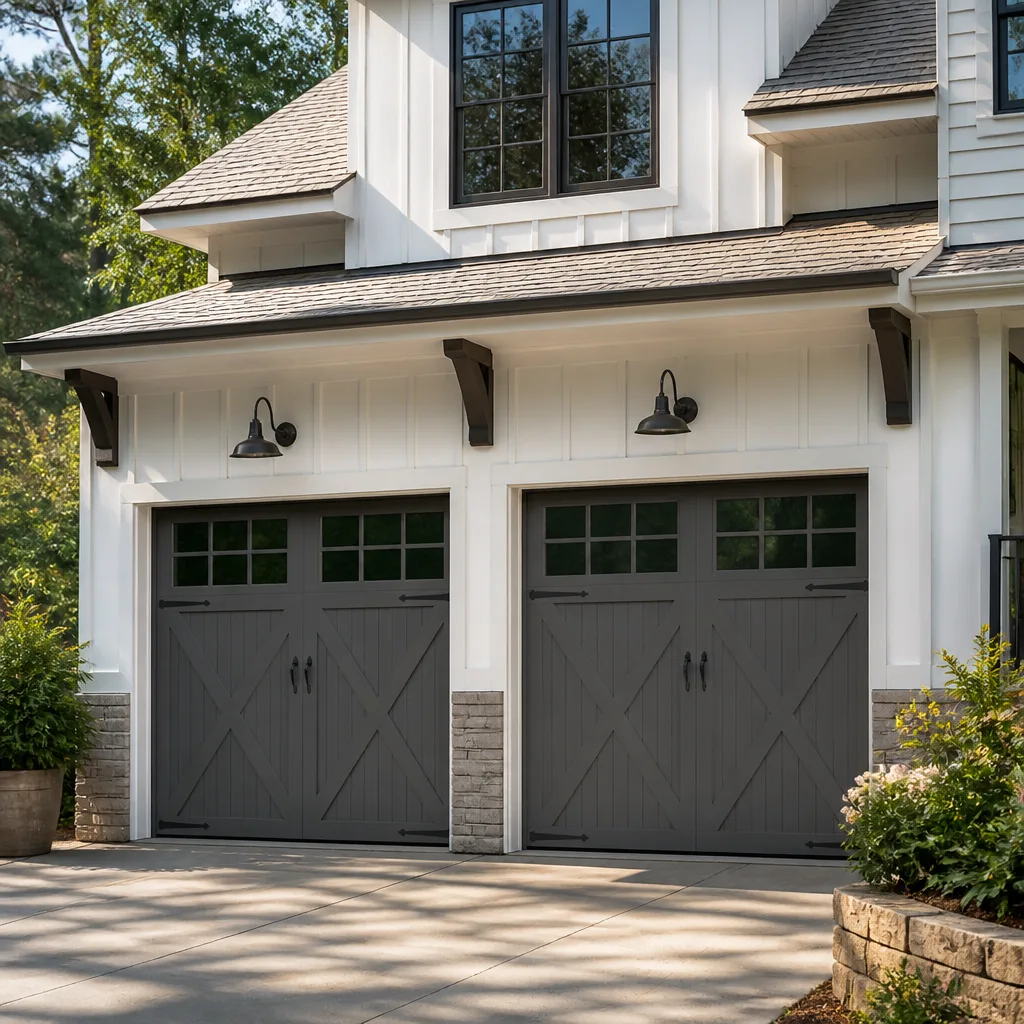 Carriage house
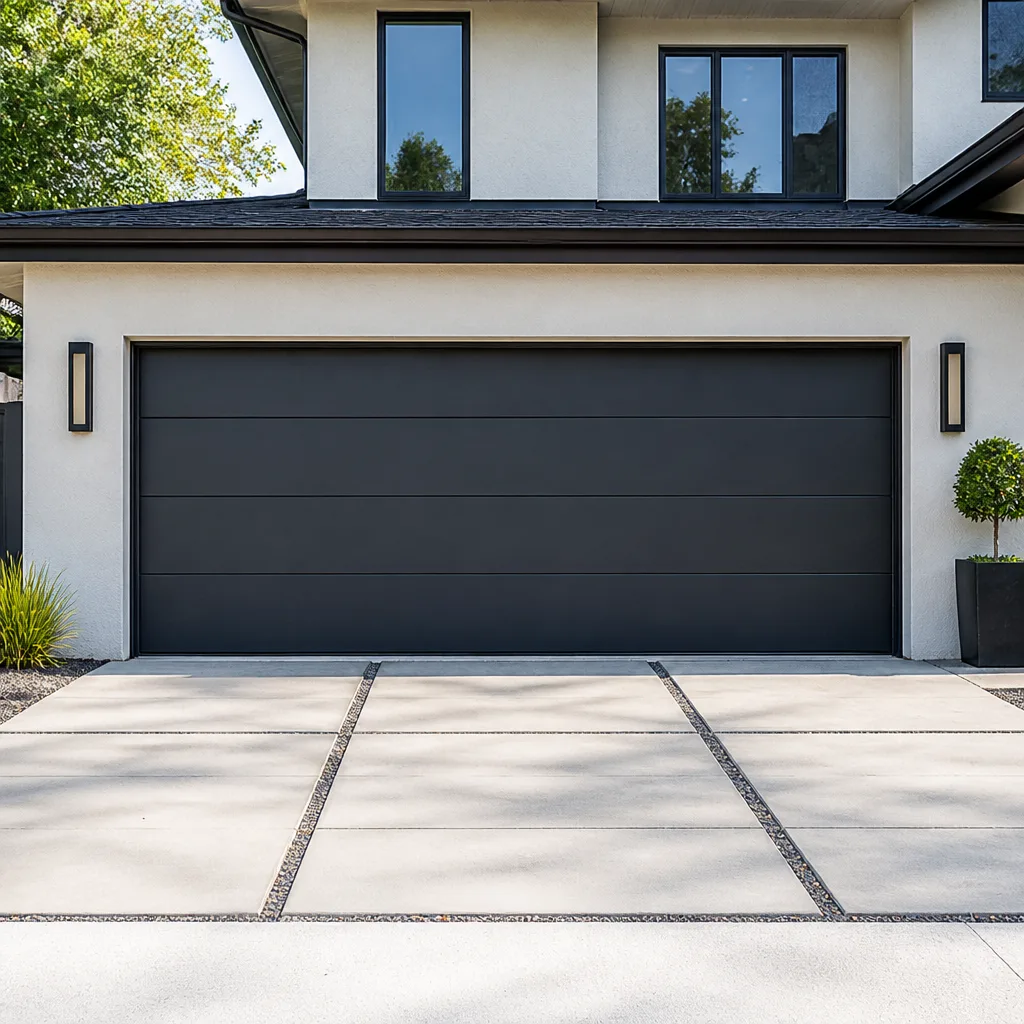 Modern flush
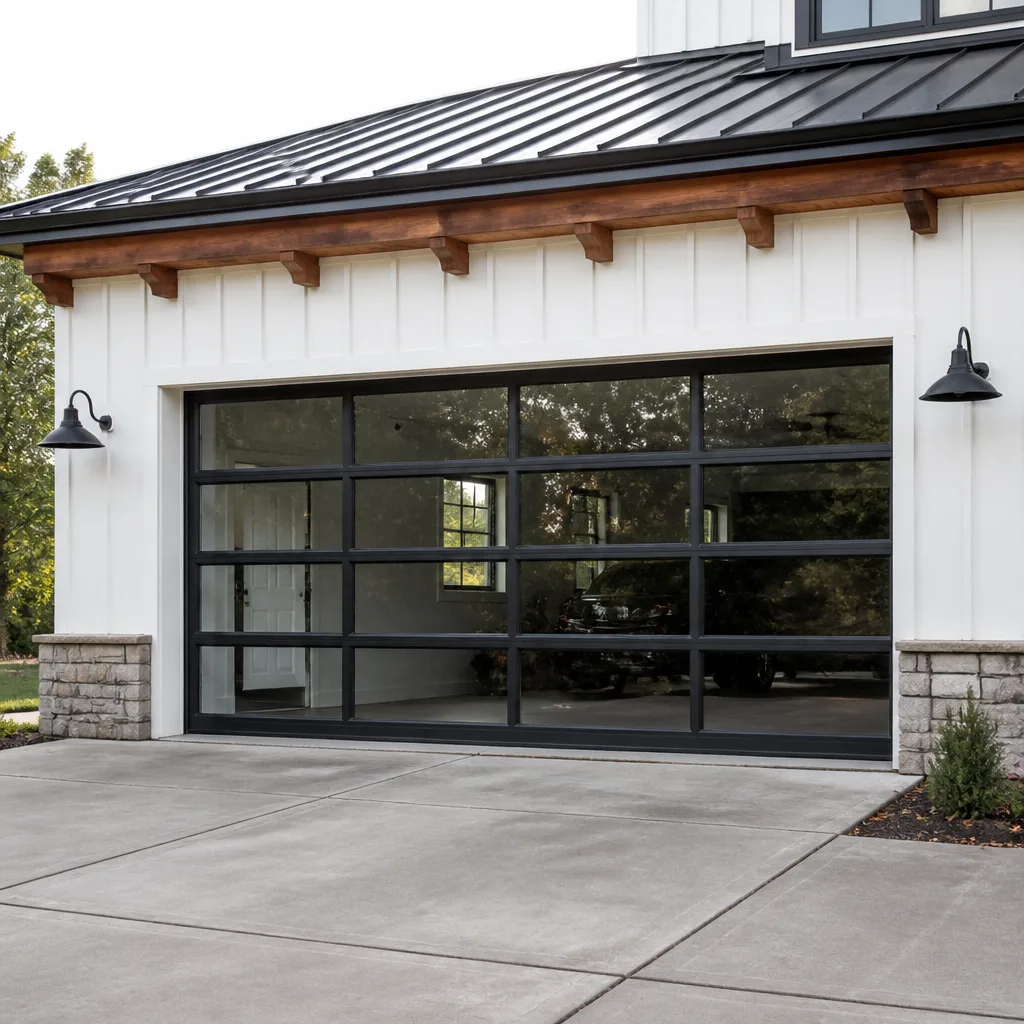 Full-view glass
 LiftMaster openers
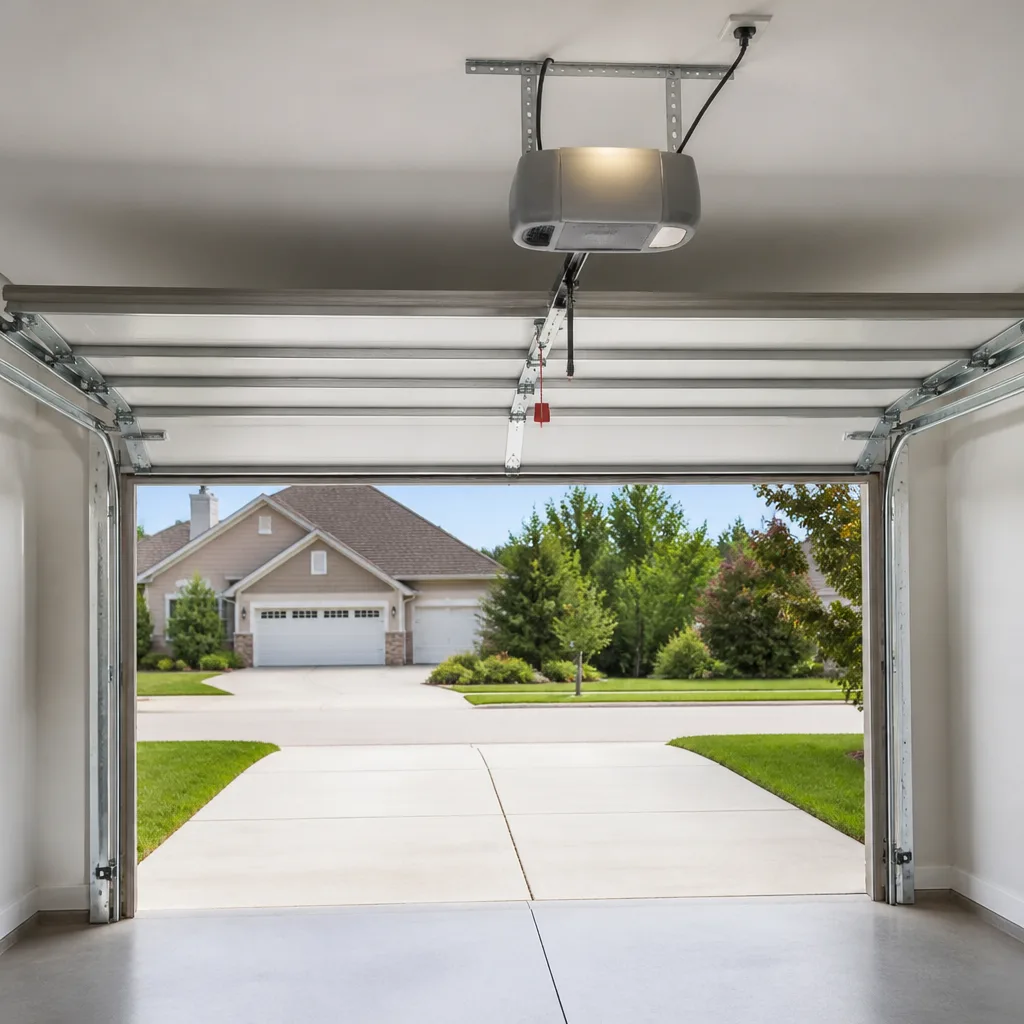 Chamberlain openers
Full 25-point door and opener safety check with every visit - springs, cables, rollers, tracks, and your LiftMaster or Chamberlain opener included
You get a price before we start. It does not change when the pro arrives.
Get your free estimateGarage Door Warning Signs: An Atascocita Homeowner’s Reference Guide
A garage door that “just feels heavy” isn’t a vague complaint. It’s a precise symptom that points to spring tension loss, and if you ignore it, the next warning sign is usually a door that won’t open at all, right when you’re already running late for work. Most homeowners misread the early clues because a garage door hides its working parts behind panels and a ceiling track. The sound you hear and the feel you notice are telling you exactly which component is failing. This guide pairs each observable warning sign with the specific part it points to, what happens if you leave it alone, and how urgently you need to act. For anyone in Atascocita dealing with a finicky door, it’s the difference between a quick repair and a much bigger problem.
Quick Answer
The most common garage door warning signs are a door that feels unusually heavy when lifted by hand, grinding or popping noises during travel, an uneven gap along the bottom, rust on the torsion spring, and an opener that fails intermittently. Each symptom points to one specific component – spring, cable, roller, track, or opener logic board – and the right response ranges from shutting the door down immediately to simply monitoring it for a week. In Atascocita’s heat and humidity, springs and opener electronics show stress earlier than in cooler climates, which makes knowing the signs more valuable here than in most places.
Styles & brands we work with
- Raised-panel steel
- Carriage house
- Modern flush
- Full-view glass
- LiftMaster openers
- Chamberlain openers
Table of Contents
- A Door That Feels Heavy Points to Spring Tension Loss
- Grinding vs. Popping: Two Noises, Two Different Problems
- Why an Uneven Bottom Gap Is Usually a Cable Issue
- Intermittent Opener Failure: Heat Stress, Not Battery
- How to Spot Rust on a Torsion Spring Before It Fractures
- Response Timeline: Shut It Down, Schedule It, or Watch It
- Common Mistakes to Avoid
- When to Call a Professional
A Door That Feels Heavy Points to Spring Tension Loss
A properly balanced garage door should lift with one hand and stay put wherever you leave it, roughly halfway open. If it drops when you let go, or if it takes real effort to raise, the springs have lost tension. That’s the whole story: the door isn’t “getting old,” the springs aren’t doing their job anymore. Garage doors weigh far more than they look like they do, and the springs carry most of that weight. When they weaken, your opener and your back start carrying it instead.
This is the single most useful warning sign to understand, because spring tension loss is progressive. It doesn’t improve. In Atascocita, where summer heat and humidity push the metal through hundreds of expansion and contraction cycles a year, springs fatigue gradually and then let go suddenly. The progression usually looks like this:
- Week one or two: the door feels slightly sluggish and the opener sounds strained.
- Week three or four: the door drifts down when you lift it by hand; the opener runs noticeably longer.
- The break: a torsion spring snaps or an extension spring stretches out, and the door may not open at all, or opens with a violent jolt.
If you notice the sluggish stage in Atascocita, schedule a service call within the week. A technician can measure the spring’s tension and either adjust or replace it. Waiting for the break means you’re likely to find out about it at the worst possible moment. And once a spring has lost tension, garage door spring repair is the correct fix; no amount of opener adjustment will substitute for a spring that’s given up. One more thing: this is not a component to inspect by hand while the door is under tension. Springs store enormous energy, and a trained technician is the right person to assess them.
It’s also worth knowing which system your door uses. Torsion springs sit on a shaft above the door and last longer on average than extension springs, which run alongside the tracks and stretch as the door closes. If you don’t know which type you have, a quick look is fine; touching either one is not.
Grinding vs. Popping: Two Noises, Two Different Problems
Most people lump every garage door noise together. They shouldn’t, because grinding and popping come from entirely different failures and need entirely different responses. Getting this distinction right is the fastest way to know whether you’re dealing with a maintenance issue or something on the edge of failure.
Grinding noise: metal-on-metal track or roller wear
Grinding is a continuous, low rumble that runs the whole time the door is moving. It almost always points to one of three things: a roller with a seized bearing, a track that’s out of alignment, or a lack of lubrication where metal meets metal. It’s a wear issue, not usually an emergency, but it accelerates. An unlubricated roller can wear a groove into the track within weeks, turning a simple roller swap into a full track replacement. If your door grinds constantly and the sound is getting louder, book a garage door repair visit within a week rather than letting it ride.
Popping noise: cable slipping or a spring starting to fracture
Popping is a sharp, single crack or series of cracks, often when the door first starts moving or just as it reaches full open. That sound is the sound of sudden release of tension. It usually means a cable has slipped off its drum, or a torsion spring has begun to fracture. The correct response is to stop operating the door and call for help. A door that pops alarmingly can drop the next time you hit the button.
Here’s a quick way to tell them apart on the spot:
- Grinding: continuous, low, runs the entire travel of the door. Wear issue. Schedule soon.
- Popping: sudden, sharp, happens at a specific point in travel. Tension or cable issue. Shut it down.
- Both at once: call a professional and describe both sounds. It means multiple components are involved.
In our experience across Atascocita, popping gets misheard as the door hitting the floor or “clearing” something. It isn’t. If you hear a pop and the door suddenly looks uneven or feels different, treat it as a tension failure until proven otherwise.
Why an Uneven Bottom Gap Is Usually a Cable Issue
When the bottom of the garage door doesn’t sit flush across the concrete, many Atascocita homeowners assume the slab is uneven. Sometimes it is, but more often the gap is a cable problem. A door that hangs crooked at the bottom is a door whose two sides aren’t lifting at the same rate. That asymmetry comes from cables, not concrete.
The bottom section of a garage door is supported by two cables, one on each side. Each cable wraps a drum at the top of the door. If one cable has stretched, slipped a wrap, or come out of its drum seat, that side of the door lifts slightly slower than the other. The door still opens and closes, so it’s easy to ignore. But an uneven door loads the tracks unevenly every time it moves, and eventually a roller jumps the track or the door binds and stops.
How to tell a cable issue from a floor issue:
- Stand inside the garage and look at the gap along the bottom with the door fully closed.
- If the gap is wider on one side than the other, and the gap changes as you open and close the door, you have a cable or tension issue.
- If the gap is consistent and only shows up where the concrete dips, the floor is the cause, and a new bottom weather seal can usually close it.
- Never reach up and adjust a cable or drum yourself. The cables are under high tension, and a slip can cause serious injury.
In Atascocita, this check is complicated by how often the garage door is used. A door that cycles several times a day puts more wear on its cables than one that opens once. If you see a visible uneven gap, don’t wait for the door to jump a track. A technician can re-seat or replace the cable and true the door while it’s still a small job.
Intermittent Opener Failure: Heat Stress, Not Battery
When the garage door opener works three times and then suddenly doesn’t, the instinct is to blame the remote or a dead battery. But intermittent opener failure that follows no pattern you can control is usually a logic board problem, and in Atascocita’s summer heat, that’s exactly what’s happening. The opener’s circuit board sits in a metal housing that heats up through long afternoon garage cycles, and a board that’s drifted out of tolerance will refuse a signal until it cools.
The pattern of a heat-stressed board looks like this:
- Works perfectly early in the morning and after dark, but ignores the remote in the late afternoon.
- Works again after you wait an hour with the garage shaded or the door closed.
- Fails more often on the hottest days and in the weeks after a heat wave.
If instead the opener clicks but doesn’t move, the problem is usually the opener’s travel limits or a stripped gear, not the logic board. If the opener works from the wall switch but not the remote, the remote or antenna is the issue. And if it works intermittently in every condition, not just heat, suspect a loose connection or a board that’s failing outright.
Most of the modern motors in Atascocita homes are lifted from the LiftMaster, Chamberlain, and Genie families, and each brand has its own board and gear set. That matters: our technicians work on these systems specifically, including the smart-home connected units like the LiftMaster and Chamberlain myQ ecosystem and Genie Aladdin Connect. We know which models after a certain production run are prone to the heat-stress pattern. If your opener is failing, don’t swap the battery in your remote three times. Get the unit checked. garage door opener repair on a heat-stressed board is usually a fast diagnosis, and in many cases a board or a complete unit is the fix rather than a piece-by-piece rebuild.
How to Spot Rust on a Torsion Spring Before It Fractures
Rust on a torsion spring is a warning sign that’s easy to miss and easy to check without touching anything. A rusted spring is a weakened spring, and a weakened spring is more likely to fracture. The visual and tactile test takes about thirty seconds and doesn’t require tools or a ladder if you look from the floor with a flashlight.
The visual test
From the floor, look up at the spring or springs mounted above the door, typically on a metal shaft across the top of the opening. You’re looking for one of four things:
- Orange or brown discoloration running along the coil. Surface rust.
- Pitting, which looks like small dark spots or craters on the metal.
- Flakes of rust on the shaft below the spring or on the floor beneath it.
- A visible gap or crack in the coil. That’s a fracture already in progress and an immediate shutdown.
The tactile test (from a safe distance)
You can’t touch a torsion spring while it’s under tension, but you can look at the shaft ends and the bearing plates for rust migration. In Atascocita’s humidity, rust spreads from the spring to the shaft and the drums. If you see rust creeping from the spring onto the shaft, the spring is not far behind. A spring that’s rusted to the point of pitting should be replaced proactively rather than run to failure.
The reason this matters is simple: a rusted spring fractures without warning, and it often takes the door with it. A fracture can drop the door hard enough to damage panels, bend a track, or damage whatever is parked beneath it. Catching rust early turns a spring swap into a small scheduled job. Ignoring it turns the same spring into an emergency on a Sunday morning when you need the car out of the garage. This is also why we treat spring work as a technician’s job, not a homeowner’s. Springs store enormous tension. The safest test is the visual one, and the safest response to a suspect spring is to call.
Response Timeline: Shut It Down, Schedule It, or Watch It
Every warning sign has a correct response, and the wrong response can cost you a lot more than the right one. Use this timeline as a decision guide. It’s the same triage we use on the phone.
Shut it down immediately (call today)
- A popping or cracking noise with the door in motion.
- A visible fracture or gap in the spring coil.
- A door that drops hard, binds, or hangs sharply crooked.
- A door that has jumped its track or lifted off one roller.
- Any time the door feels like it’s pulling free of the operator or the header.
These are safety issues. Stop using the door, leave it down if possible, and call for service.
Schedule within a week
- A door that feels heavy to lift by hand but still opens.
- Continuous grinding noise during travel.
- A consistent uneven gap along the bottom that changes with the door’s position.
- Rust or pitting visible on the torsion spring or shaft.
- An opener that strains or runs longer than usual to lift the door.
These are the signs that get worse fast. Scheduling now keeps them from becoming the shutdown list.
Monitor and re-evaluate
- One or two instances of the opener refusing a signal with no heat pattern.
- A remote that works from close range but not far away (battery or antenna).
- A gap along the bottom that’s consistent with the door’s position and only at a known dip in the floor.
Watch these for a week. If they recur, or if they start clustering with other symptoms on this page, move them up to the schedule list.
If you’re inside Atascocita and you’re not sure which list your issue belongs on, call and describe it. We’ll help you sort it out, and free estimates mean there’s no cost to finding out. This is also where our Atascocita Garage Door Repair Pros team earns its keep on the phone – a quick description of the symptom usually tells us what to bring.
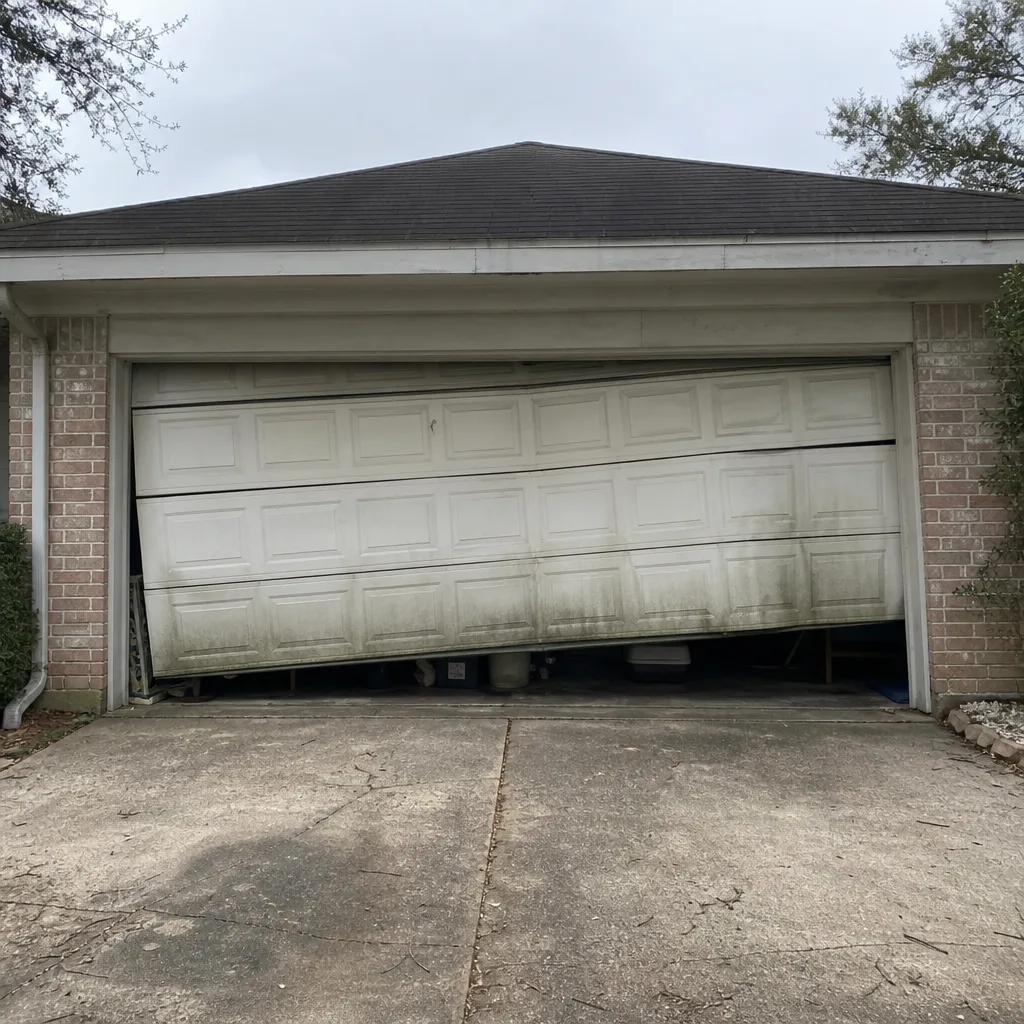
See the difference
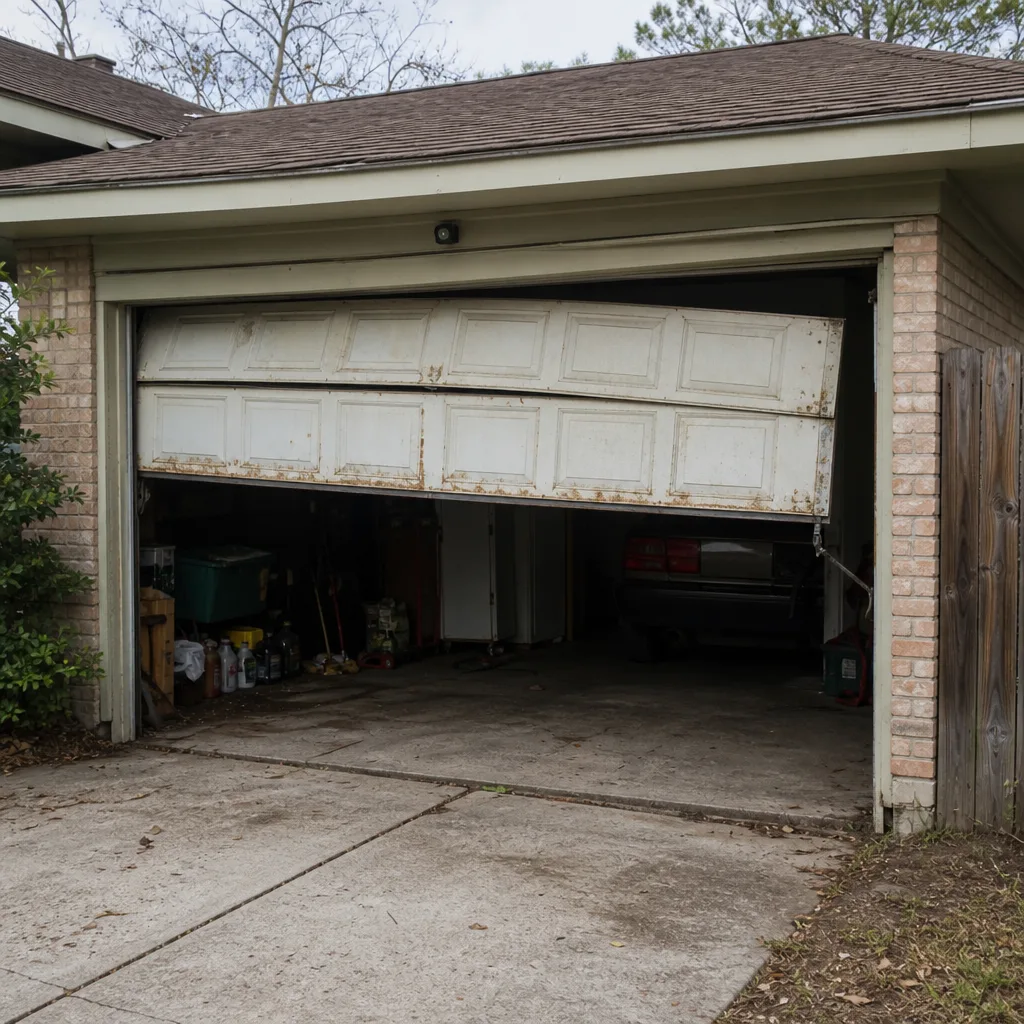 Before
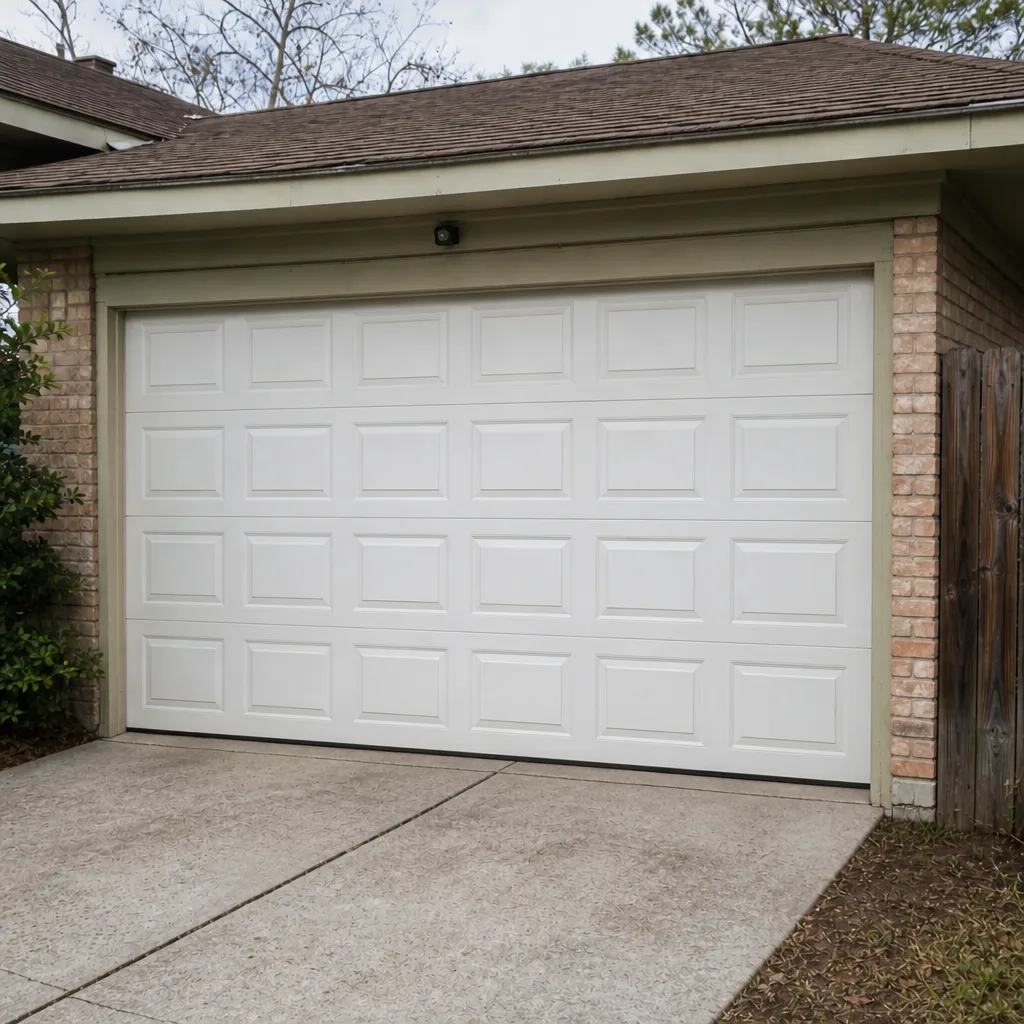 After
 Before
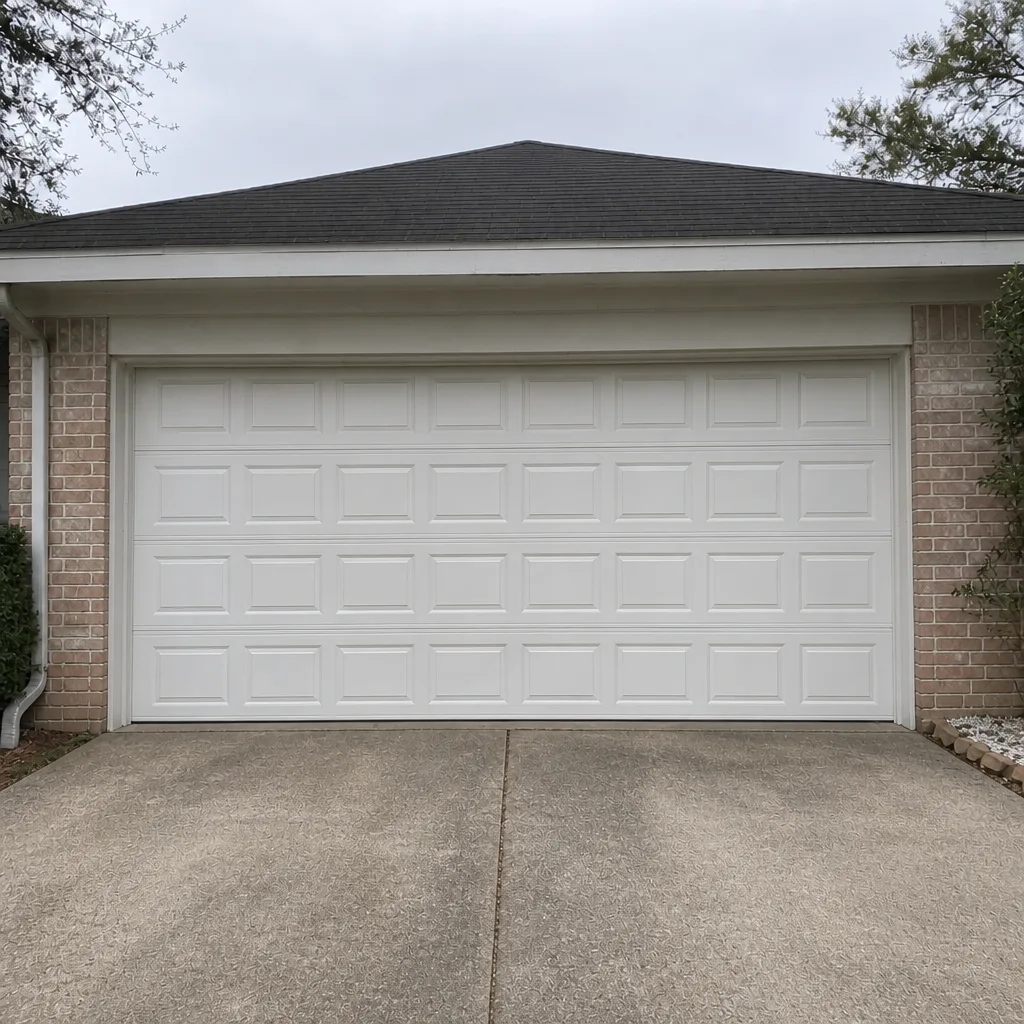 After
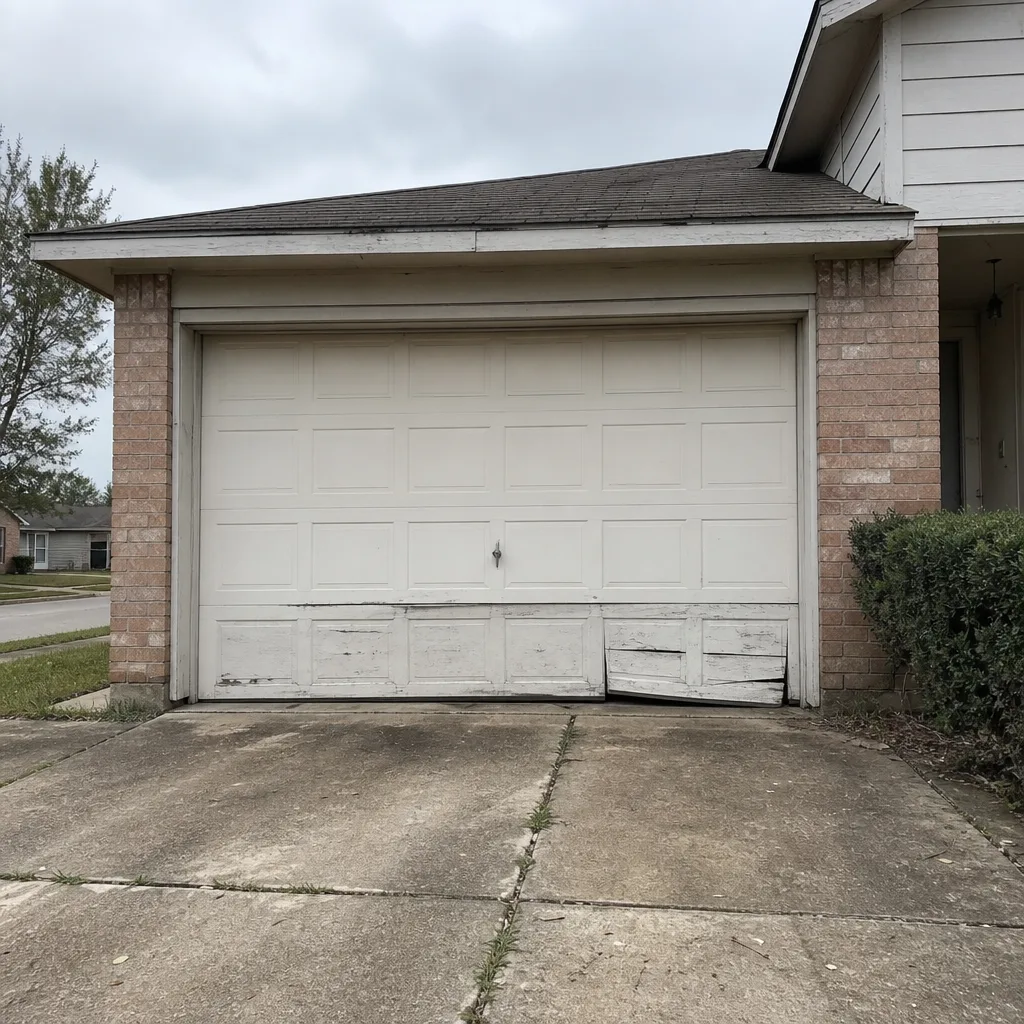 Before
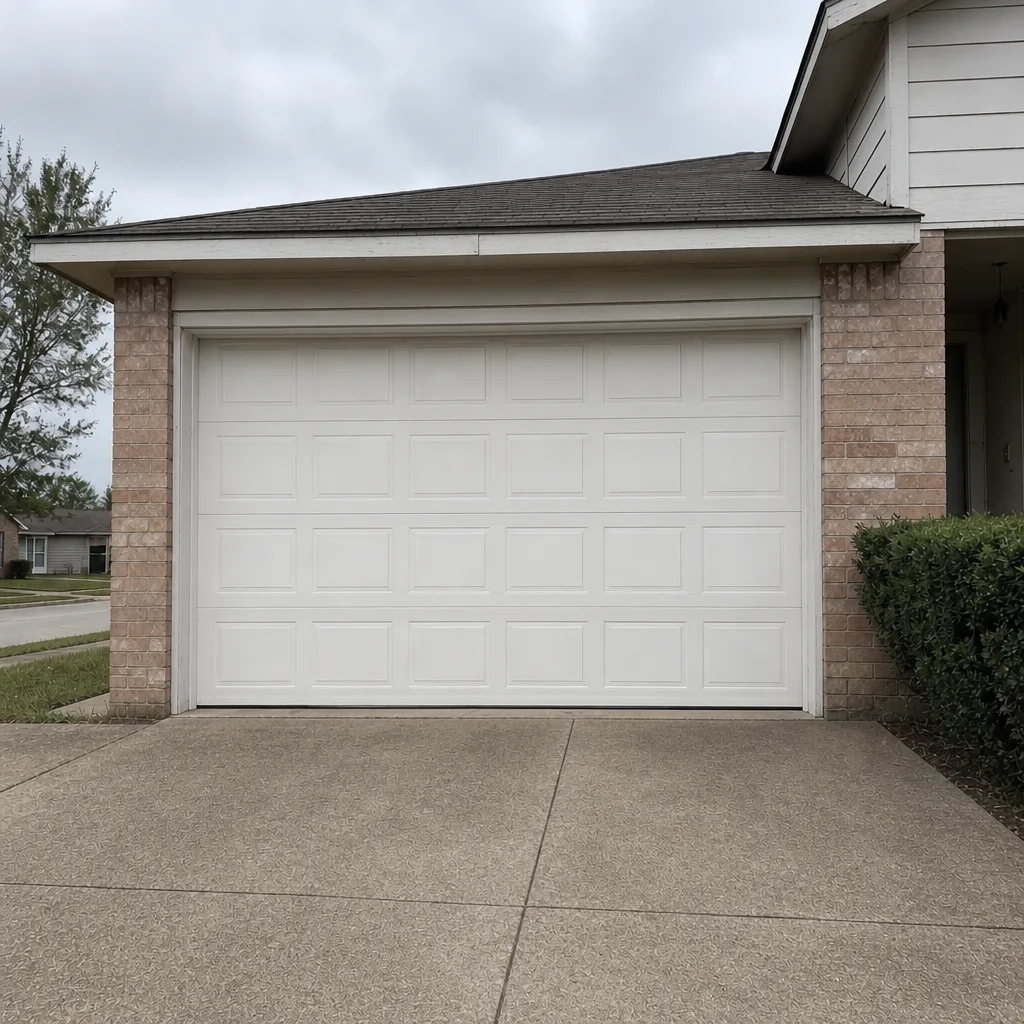 After
Common Mistakes to Avoid
- Treating every noise as “normal.” Garage doors are supposed to be quiet. A grinding or popping door is telling you something specific. Identify the sound and match it to a component.
- Blaming the remote first. Intermittent failure in Atascocita summer heat is usually the opener’s logic board, not the battery. Swapping remotes won’t fix a heat-stressed board.
- Adjusting a spring or cable by hand. Springs store enormous tension. A DIY adjustment is how people get seriously injured. The safe move is to call a technician.
- Ignoring a small gap along the bottom. An uneven gap is often a cable issue, and cables get worse. Left alone, an uneven door wears its tracks and rollers unevenly until it binds.
- Running a rusted spring to failure. Rust is a warning, not a cosmetic issue. A spring that fractures can drop the door hard and damage panels, tracks, or whatever’s under it.
- Assuming the door “just needs new rollers.” On many Atascocita doors, grinding is roller wear, but it can also be a bent track or a misaligned drum. Guessing at the part wastes money.
- Waiting for a break to call. A heavy door or a popping noise that turns into a non-opening door is always worse at the worst time. The best service call is the one you make in the “schedule within a week” stage.
When to Call a Professional
Call a professional any time the warning sign involves tension, noise that sounds like a crack, or a door that hangs crooked. That includes springs of any kind, cables, torsion shafts, and any door that has jumped a track or come loose from a roller. Also call if the door feels heavy when you lift it by hand, if the opener runs but the door doesn’t move smoothly, or if rust is visible on the spring. These are not jobs for a homeowner, and they’re not jobs for a generalist handyman either – they’re jobs for a technician who works on garage doors specifically and knows the brand on your door.
Atascocita Garage Door Repair Pros offers free estimates in Atascocita – call (844) 493-5692. Our technicians have up to 9 years of experience and are trained on the major brands, including Amarr, Wayne Dalton, Craftsman, and Raynor, as well as the LiftMaster, Chamberlain, and Genie opener families. Emergency or scheduled, we show up ready. One call covers it.
Frequently Asked Questions
The five most common warning signs are a door that feels heavy when lifted by hand, grinding or popping noises, an uneven gap along the bottom, an opener that fails intermittently in afternoon heat, and rust on the torsion spring. Each sign points to a specific component, so the fix depends on which symptom you have. If you notice more than one at the same time, call for an assessment.
Spring replacement in the Atascocita area is typically quoted per spring, and a matched pair is usually replaced together, so the pair costs roughly twice a single spring. Because prices depend on the spring type and the door’s weight, the written estimate is what sets the final price. Call (844) 493-5692 for an exact quote – estimates are free.
Yes for emergency repair calls. A door that won’t open, a snapped spring, or a door off its track is an emergency, and emergency garage door service is a core part of what we do, not an after-hours upsell. Call (844) 493-5692 and describe what’s happening so we can bring the right parts. For installation and replacement, that work is measured, ordered, and scheduled rather than same-day.
Intermittent opener failure usually means a logic board that’s heat-stressed, not a dead remote battery. The board refuses a signal until it cools, which is why it seems to fail on hot afternoons and work again in the evening. If the failure is patternless and happens in every temperature, suspect a loose connection or a board that’s failing outright.
Usually it’s a door problem, specifically a stretched or slipped cable. A floor issue produces a gap that stays in the same place regardless of the door’s position, while a cable issue produces a gap that changes as the door opens and closes. A technician can tell the difference in minutes and fix the right one.
The price is quoted and agreed before any work starts, and the written estimate is what sets the final price. If we discover an additional problem during the repair – a bent track behind a worn roller, for example – we stop and talk to you about it before doing the extra work. You’ll never get an invoice that’s larger than the quote without your approval. Call (844) 493-5692 for a free estimate.
The Bottom Line
Every garage door failure tells you about itself before it happens, and the signs are specific. A heavy door means spring tension loss. Grinding means roller or track wear. Popping means cable or spring fracture starting. An uneven gap usually means cable. Intermittent afternoon failure means a heat-stressed logic board. Rust on a spring means replace it before it fractures. Match the symptom to the component, respond at the right speed, and you’ll spend far less than the homeowner who ignores the warnings. In Atascocita, where heat and humidity work on these parts year-round, paying attention to the early clues is the difference between a small scheduled job and a door that quits when you least expect it.
If any of these warning signs describe your door, or if you’re planning a full replacement and want one company to handle the door, the opener, and the install, Atascocita Garage Door Repair Pros can help. Call (844) 493-5692 for a free estimate. Our technicians work on all eight major brands – LiftMaster, Chamberlain, Genie, Clopay, Amarr, Wayne Dalton, Craftsman, and Raynor – so the diagnosis starts from familiarity rather than a guess. Emergency or scheduled, we show up ready.
Written by the team at Atascocita Garage Door Repair Pros.